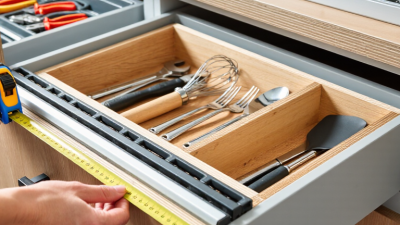
Why Choose Cabinet Drawer Runners for Your Projects?
A drawer runner is easy to overlook until a loaded drawer sticks, rattles, or slams shut. Then the hardware becomes part of the daily experience. Houzz’s 2024 U.S. Kitchen Trends Study found that 76% of renovating homeowners upgraded their cabinets, underscoring how much attention projects give to storage. Choosing a runner deserves the same care as choosing the drawer front.
Cabinet Runners Drawer Runner options vary in load capacity, extension, mounting style, and closing action. The right choice depends on the drawer’s dimensions, contents, and expected use—not just its price. A deep pot drawer needs different support from a shallow cutlery tray. Small details matter. Industrial designer Charles Eames captured that idea: “The details are not the details. They make the design.” His words are not specific to drawer hardware, but they fit the decision well.
For project teams, a dependable runner can support smooth access, quieter operation, and a more consistent finish. Check the manufacturer’s load ratings and installation instructions, then confirm that the cabinet opening is square. Even quality hardware can disappoint when alignment is off. And not every premium feature suits every project; soft-close action may be unnecessary for a low-use utility drawer. The best selection balances performance, budget, and the way people will actually use the space.
What Cabinet Drawer Runners Are and How They Work
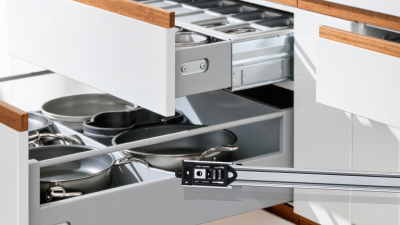
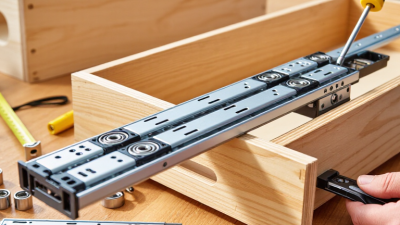
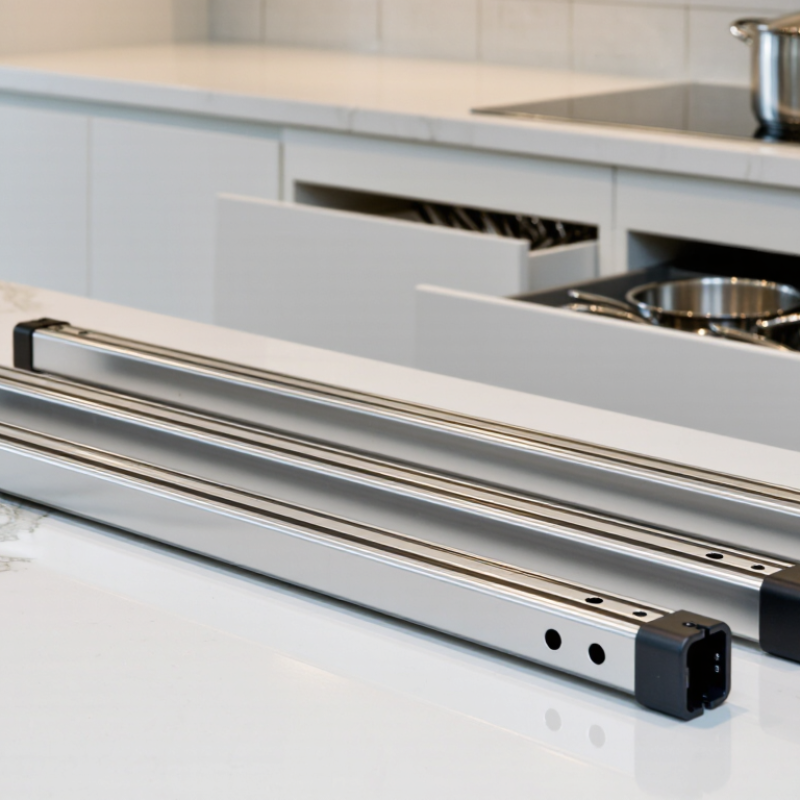
Cabinet drawer runners are the hardware that supports a drawer and guides it in and out of its cabinet. A typical pair attaches to the drawer sides or underside and to the cabinet interior. As the drawer moves, rollers or ball bearings reduce friction; some designs also use a soft-close mechanism to slow the final few centimetres. Side-mounted runners are visible when the drawer opens, while undermount runners stay hidden beneath it. Full-extension models let the drawer travel farther, making items at the back easier to reach. Small detail. Alignment matters: a slightly twisted cabinet or uneven gap can cause rubbing, noise, or a drawer that drifts open.
The 2024 U.S. Houzz Kitchen Trends Study reports that 76% of renovating homeowners upgraded their cabinets. That broad survey does not measure runner performance, but it shows how often cabinet components are part of renovation work. For technical checks, ANSI/BHMA A156.9 covers performance testing for cabinet hardware, including durability and load-related evaluation. Match the runner’s rated capacity to the drawer and its expected contents, not just the empty drawer’s weight. A cutlery drawer has different demands from one holding cookware. Check the installation instructions, too; clearances vary by runner type. A useful reminder: smooth movement alone does not prove a runner is correctly rated.
Why Choose Cabinet Drawer Runners?
What Cabinet Drawer Runners Are and How They Work
Drawer runners are paired tracks that guide and support a drawer as it opens and closes. This illustrative model shows drawer movement as a percentage of its rated extension: 0% is closed and 100% is fully extended. Actual travel depends on the runner design and drawer dimensions.
Key Types of Runners and Their Main Differences
Drawer runners affect how a cabinet feels every day: the pull, the noise, and whether a loaded drawer stays level.
Houzz’s 2024 U.S. Kitchen Trends Study reports that 76% of renovating homeowners upgraded their cabinets. That makes runner selection a practical detail, not an afterthought. Still, a smooth test with an empty drawer proves little.
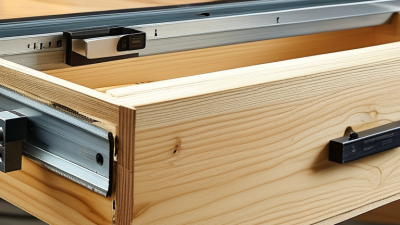
Side-mount ball-bearing runners are visible when the drawer opens, but they are sturdy and often offer full extension.
Undermount runners hide beneath the drawer, creating a cleaner look and leaving the sides unobstructed. They usually need precise drawer dimensions and installation.
Roller runners are simple and economical, though they may feel less stable under heavier loads.
Center-mount runners use one track beneath the drawer; they suit lighter applications but can wobble when weight shifts.
Check the runner’s rated load against the drawer, its contents, and how often it will be used. Small details matter. A soft-close feature can reduce slamming, but it will not fix poor alignment. One trade-off is easy to miss: full extension improves access to items at the back, yet the drawer needs enough clearance to open fully. Measure twice. Even then, site conditions can complicate a neat plan.
How Runners Affect Drawer Function, Safety, and Durability
Drawer runners influence how a cabinet feels every day. A well-matched pair lets a loaded drawer move smoothly instead of scraping or shifting sideways. Full-extension runners expose the back of the drawer, which helps users reach stored items without leaning or pulling out the box. Choose a load rating that accounts for the drawer and its contents, not just the hardware alone. A little margin is sensible.
Safety depends on more than smooth movement. Securely mounted runners help prevent a drawer from tilting when it is opened, especially when heavier items sit near the front. Soft-close mechanisms can reduce slamming and trapped-finger risks, though they do not remove them completely. Keep children’s access and the drawer’s intended use in mind.
Check the fit.
Durability starts with accurate installation. Runners mounted out of level can bind, wear unevenly, or place extra stress on screws. Measure both sides carefully, and test the drawer before loading it. Dust, moisture, and repeated heavy use also affect service life; metal parts can corrode in damp spaces, while loose fasteners may need attention over time. In practice, even good runners can disappoint when the cabinet opening is uneven. That detail is easy to miss.
Factors to Consider When Choosing Runners for a Project
Why Choose Cabinet Drawer Runners for Your Projects?
Factors to Consider When Choosing Runners for a Project
Start with the drawer’s dimensions and expected load. Measure its width carefully, including the clearance available inside the cabinet. A runner that is too wide may bind; one with excessive clearance can feel loose. Consider what the drawer will hold, too. Cutlery needs less support than a drawer filled with cookware or tools. Check the runner’s stated load rating and match it to the likely contents, not just the empty drawer.
Choose a movement style that suits the cabinet and its users. Side-mounted runners are often easier to inspect and replace, while concealed runners create a cleaner look but require accurate installation. Decide whether full extension matters: it lets users reach items at the back, but may not suit every cabinet depth. Soft-close features can reduce slamming, though they do not compensate for poor alignment. Small details matter. I would still recheck measurements before ordering; it is easy to overlook a cabinet’s uneven interior.
Tips: Test the runner with the drawer loaded, not empty. Listen for scraping, check that both sides move evenly, and confirm the drawer closes without pressure. If installation instructions leave clearance unclear, verify the dimensions with the supplier before cutting or drilling.
Matching Runner Features to Project Requirements
Why Choose Cabinet Drawer Runners for Your Projects?
Matching Runner Features to Project Requirements
Matching drawer runners to a project starts with the cabinet’s purpose, not the hardware catalogue. A deep kitchen drawer holding cookware needs a different load capacity from a shallow bathroom drawer storing toiletries. The Houzz 2024 U.S. Kitchen Trends Study reports that 76% of renovating homeowners upgraded their cabinets. That figure highlights how often storage decisions enter renovation work. It does not identify runner preferences, though. Treat it as context, not proof of what every project needs.
Check expected load, drawer width, available depth, and how far the drawer must extend. Full-extension runners expose items at the back; soft-close mechanisms reduce slamming but may add cost. Small details matter. In workshops, a common mismatch is choosing a runner by load rating alone, then finding the drawer binds because the cabinet is out of square. Measure twice. ANSI/BHMA A156.9 covers cabinet hardware, including drawer slides, and provides a useful reference for performance testing. Still, confirm the runner’s stated rating and installation requirements for the specific model. Dust, uneven mounting, and frequent heavy use can change how a runner performs over time.