留言

Why Choose Drawer Channel for Global Sourcing?

Why Choose Drawer Channel for Global Sourcing?

Global sourcing decisions often begin with price, but experienced buyers look beyond the first quotation. A reliable Drawer Channel must support smooth movement, stable loading, and consistent installation across different cabinet designs. Imagine a kitchen drawer opening quietly after thousands of cycles. That small movement reflects material quality, engineering accuracy, and supplier discipline.

Andreas Hettich, a long-time furniture-fittings executive, expresses the principle clearly: “Good hardware should make daily movement feel effortless.” His view captures the real value of a dependable Drawer Channel. It should not attract attention through noise, friction, or premature failure. It should simply work.

That sounds simple.

For international buyers, the evaluation is more demanding. Steel thickness, ball-bearing performance, corrosion resistance, extension length, and closing control all influence product results. Packaging also matters. A damaged rail can delay assembly, increase labor costs, and weaken customer confidence. Supplier communication matters just as much. Clear drawings, sample testing, inspection records, and stable production schedules reduce avoidable surprises.

Still, no sourcing decision is perfect. A lower-cost channel may perform well in one climate but fail under heavier humidity or different installation habits. Buyers should test real samples instead of trusting attractive catalog images. They should also review tolerance data, cycle testing, replacement policies, and production capacity.

Global sourcing is not merely about finding the cheapest Drawer Channel. It is about choosing a partner that can repeat the same performance, shipment after shipment. That expectation may seem demanding. It is necessary.
Why Choose Drawer Channel for Global Sourcing?

What Is a Drawer Channel and How Does It Work?

Why Choose Drawer Channel for Global Sourcing?

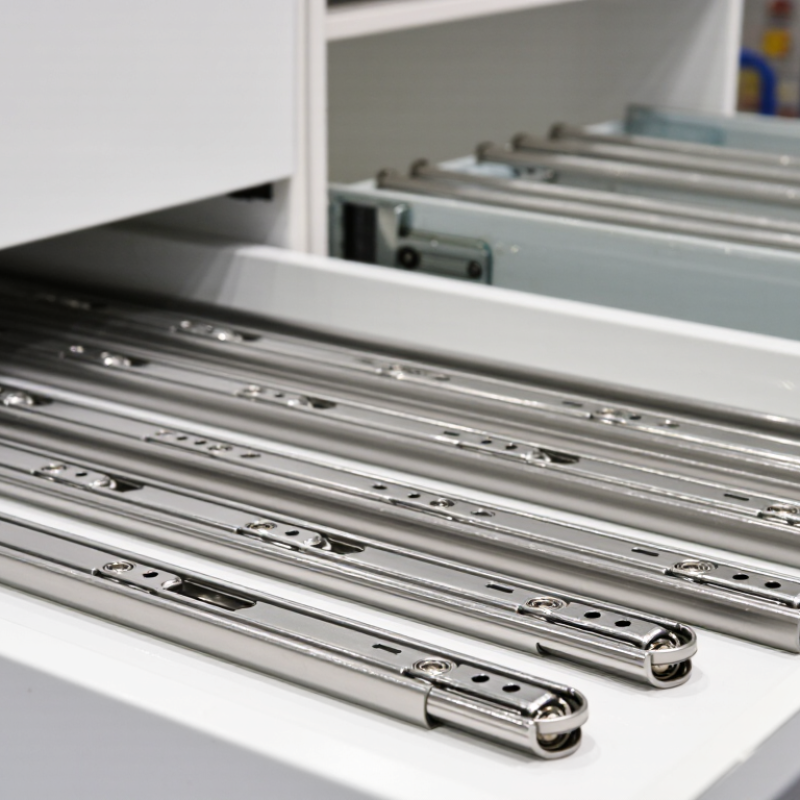
A drawer channel is the metal sliding mechanism fitted between a drawer box and cabinet. It controls opening, closing, alignment, and load support. Most channels use ball bearings or rollers inside nested steel members. When the drawer moves, these members extend in sequence, distributing weight across the slide. Full-extension models expose nearly the entire drawer interior. Soft-closing versions add a damper and spring system near the final closing stage.

Performance depends on more than appearance.

Buyers should check load capacity, extension length, mounting tolerance, corrosion resistance, and cycle testing. ISO 7170 provides durability and strength guidance for storage furniture, which helps create clearer purchasing specifications. Grand View Research estimated the global furniture market at about USD 516.6 billion in 2022, with continued growth through 2030. That scale increases demand for consistent, replaceable hardware. Yet market growth does not guarantee reliable channels.

In practical sourcing, a channel rated for 45 kilograms may perform differently after uneven loading or poor installation. Cabinet material also matters. Thin panels can loosen around mounting screws. Factory samples should be tested with realistic drawer weights, repeated cycles, and humid conditions. The Freedonia Group’s furniture industry analysis highlights replacement demand and production efficiency as important market factors. Still, choosing the lowest quotation can hide packaging damage, dimensional variation, or weak quality control. That assumption needs review. A written tolerance sheet, inspection record, and independent load test make global purchasing more dependable.
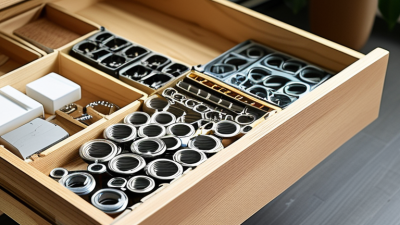
Which Drawer Channel Types Suit Different Applications?

Why Choose Drawer Channel for Global Sourcing?

Which Drawer Channel Types Suit Different Applications?

Choosing the right drawer channel starts with the drawer’s daily workload. Side-mount ball-bearing channels suit office cabinets, bedroom furniture, and general storage. They offer stable movement and simple installation. Full-extension models let users reach the back of deep drawers. Fit matters. Check cabinet depth, drawer width, clearance, and expected load before ordering.

Undermount channels create a cleaner appearance because they remain hidden beneath the drawer. They work well in modern kitchens, bathroom units, and premium furniture. Soft-close versions reduce impact and protect both the drawer and cabinet frame. Push-to-open channels support handle-free designs, but they need accurate alignment. Small installation errors can cause unwanted opening or uneven gaps.

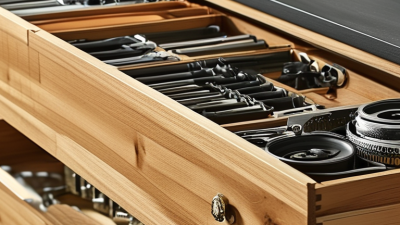
Heavy-duty telescopic channels are better for tool cabinets, workshop storage, and equipment cases. They support heavier loads when mounted correctly and may offer partial or full extension. For humid areas, buyers should examine surface protection and corrosion resistance. In my fitting experience, load ratings can be misleading when screws, drawer materials, or mounting positions are weak. Measure twice. A channel that looks suitable on paper may fail after repeated use. Suppliers should also confirm testing methods, packaging protection, and replacement availability before global sourcing.

How Do Drawer Channels Support Efficient Global Sourcing?

Drawer channels make global sourcing more manageable because their performance can be measured. Standard sizes, load ratings, extension lengths, and mounting methods help buyers compare suppliers fairly. Clear technical drawings also reduce questions between designers, factories, and inspection teams. In practice, a consistent specification can shorten approval time and limit costly sampling errors.

Reliable sourcing requires more than a low unit price. Check steel thickness, surface treatment, cycle testing, packaging strength, and replacement availability. For example, a channel may pass a workshop test but fail after humid sea transport. Request production samples, inspection records, and declared tolerances before placing a large order. Small gaps matter. However, specifications are never perfect. A drawing may miss a real installation problem, such as uneven cabinet panels. That weakness should invite testing, not be hidden. Batch labels, moisture protection, and carton markings also support smoother receiving inspections.

Tips: Use one approved datasheet for every supplier. Compare landed cost, not only quotation price. Confirm lead times, sample approval steps, and packing details in writing. Keep a small buffer for schedule changes. A slightly higher-priced channel may reduce returns and assembly delays, but this should be verified with actual test results.

How Can Buyers Assess Quality, Compatibility, and Supplier Reliability?

Why Choose Drawer Channel for Global Sourcing?

How Can Buyers Assess Quality, Compatibility, and Supplier Reliability?

A drawer channel should be judged beyond its surface finish. Request material details, load ratings, extension length, and tested cycle results. Check whether the steel thickness matches the supplier’s specification. A smooth sample proves little. Ask for inspection records from the same production batch. Look closely at mounting holes, ball movement, locking parts, and coating consistency. Small burrs can damage cabinets or create uneven movement.

Compatibility begins with accurate measurements. Compare the channel’s closed length, side clearance, installation method, and load direction with the drawer design. Measure both cabinet walls, not just one. A difference of two millimeters may cause binding. Confirm whether the channel supports side mounting, under mounting, or a specific drawer material. Trial installation matters. A product may meet a drawing yet fail inside a real cabinet.

Supplier reliability needs evidence over promises. Request a pre-production sample, packaging photos, quality procedures, and a clear response plan for defects. Verify production capacity through lead-time records and batch traceability. A supplier that answers technical questions precisely is usually easier to manage. Still, communication can look better than reality. I would use an independent inspection for the first shipment, even after receiving excellent samples. That extra cost may feel unnecessary, but one failed container can cost much more. No assessment is perfect. Recheck assumptions before placing a larger order.

What Cost, Compliance, and Logistics Factors Should Buyers Consider?

Why Choose Drawer Channel for Global Sourcing?

When buyers source drawer channels globally, the lowest unit price can hide the real cost. Compare steel grade, finish, load rating, extension type, and expected cycle life. A channel that bends after repeated use creates replacement, labor, and complaint costs. Ask for a clear quotation with tooling, samples, packaging, testing, and transport separated. Small details matter.

Compliance should be checked before purchase orders are released. Request material declarations, inspection records, dimensional tolerances, and test results matched to the destination market. Confirm restricted substances, labeling, product documentation, and customs requirements with a qualified local adviser. Do not rely on a generic certificate. Its scope may be wrong. This is where buyers sometimes move too quickly. Independent sample checks can reveal inconsistent plating, uneven movement, or missing documents before shipment.

Logistics planning affects both cash flow and availability. Compare carton strength, pallet efficiency, container utilization, moisture protection, and damage allowances. A small packaging change can alter freight volume across thousands of units. Agree on inspection points, acceptable defect levels, and claim procedures before shipment. Also confirm production capacity, booking windows, transit buffers, and backup routes. I would not trust a perfect forecast. Ports delay. Build practical margin.