7 Tips for Choosing the Best Drawer Rails?
Choosing the right Drawer Rails affects more than smooth movement. It influences storage, safety, noise, and the daily feel of a cabinet.
Industry data supports this practical concern. The Grand View Research report on furniture hardware identifies durability, functional design, and home renovation as major market drivers. Meanwhile, Houzz’s 2024 U.S. Kitchen Trends Study shows that homeowners continue investing in better storage during kitchen upgrades. These findings suggest a simple truth: small hardware decisions can shape expensive renovation results. Yet reports rarely explain what happens inside a busy kitchen drawer. A rail may face repeated opening, uneven loading, dust, humidity, and hurried use.
“Good hardware should disappear in use, but remain dependable for years,” says Philipp Blum, a senior figure associated with Blum, a leading cabinet hardware manufacturer. This principle gives our guide a useful starting point. The best Drawer Rails are not always the most expensive. They should match drawer weight, extension needs, cabinet dimensions, and installation skill. Soft-close performance matters. So does future maintenance.
Some details are easy to overlook.
A deep drawer filled with cookware needs stronger load support than a shallow cutlery drawer. Side-mount rails may simplify replacement, while concealed runners can create a cleaner appearance. Measurement errors remain common, even among experienced installers. I have found that a rail can feel excellent during a showroom test yet perform poorly after incorrect alignment.
This guide presents seven practical tips for comparing Drawer Rails with greater confidence. No checklist is flawless, but careful selection reduces noise, sagging, premature wear, and costly rework.
What Drawer Rails Are and How They Affect Drawer Performance
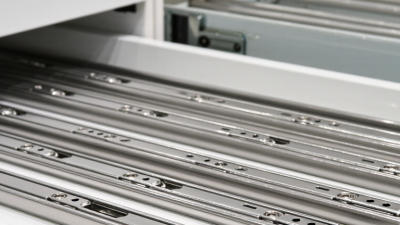
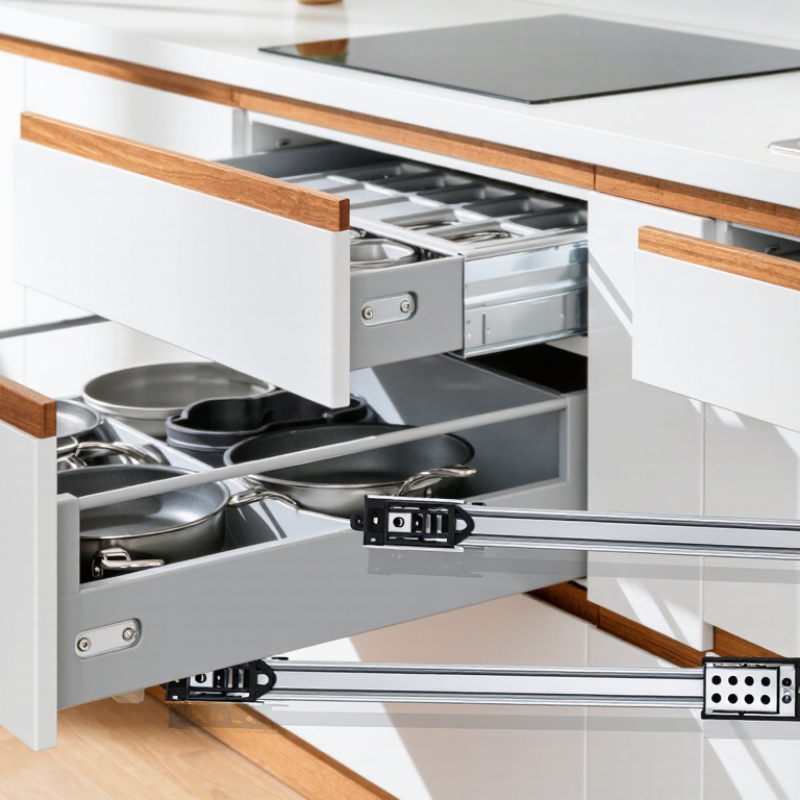
Drawer rails, also called slides, connect a drawer box to its cabinet. They guide opening, support weight, and control movement. Most systems use ball bearings, rollers, or concealed tracks. Their design affects alignment, noise, access, and service life. A full-extension rail exposes the drawer’s rear. That helps when storing deep cookware or small tools. Limited extension leaves hidden space and may encourage overloading.
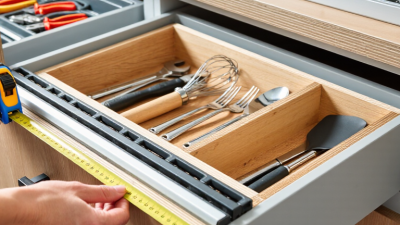
Choosing rails starts with accurate measurements. Check drawer width, cabinet depth, side clearance, and mounting position. Even a two-millimeter error can cause rubbing or uneven gaps. Match the load rating to real use, not an empty drawer. Plates, hardware, and documents become surprisingly heavy. Soft-close rails reduce impact, but they cannot correct a crooked installation. I once trusted the cabinet walls and skipped a level check. The drawer looked fine at first, but its gaps changed after repeated use. Measure twice.
For frequent use, consider full extension, corrosion-resistant materials, and tested cycle performance. In humid rooms, ordinary steel may stain or move less smoothly. Look for clear instructions and replacement availability. A reliable load rating should identify its testing conditions. Do not choose by price alone. The cheapest rail may need earlier adjustment or replacement. Still, advanced features are not always necessary. A light bedroom drawer may need simple, quiet support. The rail should fit the drawer, the room, and the person installing it. Practical choices usually outperform impressive specifications.
How to Match Rail Types With Drawer Design and Cabinet Structure
7 Tips for Choosing the Best Drawer Rails
How to Match Rail Types With Drawer Design and Cabinet Structure
Drawer rails should match the drawer’s load, depth, and opening frequency. A shallow cutlery drawer needs smooth, compact runners. A deep cookware drawer needs stronger full-extension rails with controlled movement. The 2024 U.S. Houzz Kitchen Trends Study reported a median major kitchen renovation spend of $55,000. That investment makes reliable hardware more than a minor detail. Measure the cabinet opening carefully, including side clearance and internal depth. Small errors can cause rubbing, sagging, or uneven gaps.
Tip 1: Match rail capacity to real weight, not empty-box weight. Plates, pans, and appliances quickly exceed expectations. Tip 2: Use side-mounted rails for traditional cabinet boxes and easier replacement. Undermount rails suit clean-lined drawers and conceal the mechanism, but they demand precise construction. Tip 3: Choose full extension when users need to reach the rear corners. Partial extension may work for shallow storage. It can feel restrictive in deep drawers.
Cabinet material also matters. Solid timber tolerates screw pressure better than thin particleboard. Reinforce weak mounting areas before installation. Tip 4: Check whether the drawer box has enough clearance for the selected rail. Tip 5: Consider soft-closing systems in busy kitchens, where repeated impact can loosen joints. I have seen elegant drawers fail because the rail was chosen by appearance alone. That mistake is easy to repeat. Test one loaded drawer before ordering every set. Data helps, but the cabinet still decides.
7 Tips for Choosing the Best Drawer Rails
Match rail types with drawer design, cabinet structure, clearance, extension, and expected load.
The chart compares representative typical load ratings for common drawer rail types.
Side-mount and heavy-duty telescopic rails are suitable for wider or heavier drawers,
while concealed undermount rails support a cleaner appearance and require more precise cabinet construction.
Actual capacity depends on rail length, installation quality, drawer width, and cabinet material.
How to Choose the Right Rail Length, Load Capacity, and Extension
Choosing drawer rails starts with accurate measurements, not attractive packaging.
Measure the cabinet depth from the front edge to the back panel. Then select a rail slightly shorter than that space. A rail that is too long can bind against the cabinet. A short rail wastes storage and reduces stability.
For most household drawers, full extension is practical because it exposes the rear contents. Check the manufacturer’s required clearance on both sides. Small errors matter.
Load capacity should reflect real use, not an empty drawer. Add the drawer weight, stored items, and occasional impact from closing. A cutlery drawer may need modest capacity, while a drawer holding cookware needs much more.
ANSI/BIFMA X5.9-2019 provides recognized testing methods for storage furniture, but its test loads do not automatically certify every rail. Read the stated rating carefully.
Is it per pair or per individual rail?
That detail is easy to miss.
Industry surveys also show why access matters. The NKBA 2024 Kitchen Trends Report, based on feedback from more than 500 design professionals, identifies storage efficiency as a continuing kitchen priority. Full-extension rails support that priority, but extension length alone cannot fix poor installation.
Keep the cabinet square, align both rails precisely, and test the drawer before loading it. My own mistake was trusting a heavy-duty label without checking cycle testing and side clearance. It worked at first. Then the drawer sagged.
Choose the rail for its measured load, intended use, and verified test information.
Which Materials and Finishes Provide Better Durability and Smoothness
7 Tips for Choosing the Best Drawer Rails?
Which Materials and Finishes Provide Better Durability and Smoothness
Material choice strongly affects drawer performance. Cold-rolled steel offers excellent load support for kitchen cabinets and workshop storage. Stainless steel resists moisture better, especially near sinks or laundry areas. Aluminum feels lighter, but it may bend under heavy loads. Reinforced polymer rails can operate quietly, although their strength depends on design quality. Check the stated load rating, not just the rail’s appearance. A drawer carrying cookware needs different support from one holding clothing.
Finishes also influence service life. Zinc plating helps protect steel from ordinary humidity and surface scratches. Powder coating creates a thicker barrier and offers many color options. However, damaged coating can expose the metal beneath it. Smooth finishes reduce friction, but finish alone cannot correct poor alignment. Look for accurately formed tracks, reliable bearings, and corrosion-resistant fasteners. Soft-closing mechanisms should move steadily, without sudden resistance or loud impact.
In my installation experience, clean alignment matters as much as material. Even premium rails can feel rough when screws sit unevenly. Measure the cabinet opening carefully. Leave the manufacturer’s required clearance. Keep wood dust away from moving parts. A small mistake here is easy to overlook. Yet it can shorten the rail’s useful life. I once selected a highly corrosion-resistant finish for a dry room, where a simpler option would have worked just as well. Consider humidity, weight, cleaning habits, and daily use before paying for extra features.
What Installation Features and Maintenance Needs Should You Compare
Choosing drawer rails requires more than checking load capacity. Measure the cabinet opening, drawer width, and available side clearance carefully. A rail that fits the drawer may still fail inside an uneven cabinet. I once trusted a rough measurement and had to reposition the rails. That mistake was avoidable.
Compare installation features before buying. Side-mount rails are practical for many repairs and allow easier adjustment. Undermount rails create a cleaner appearance but demand accurate drawer construction. Look for clear mounting holes, adjustable brackets, and included screws suited to the cabinet material. Soft-close hardware should move smoothly without forcing the drawer shut. Test the action by hand. A stiff beginning often signals poor alignment.
Maintenance needs deserve equal attention. Choose corrosion-resistant materials for kitchens, laundry rooms, or humid workshops. Check whether the rails can be cleaned without removing the drawer. Wipe away sawdust and spilled liquids with a dry or slightly damp cloth. Avoid heavy oils, which can trap dust and slow the bearings. Inspect loose screws every few months, especially on heavily used drawers. Some rails need occasional lubrication, while sealed systems may not. I still overlook this step when a drawer feels normal. That is risky. Watch for uneven gaps, scraping sounds, or a drawer that opens by itself. These small signs usually appear before serious rail damage.