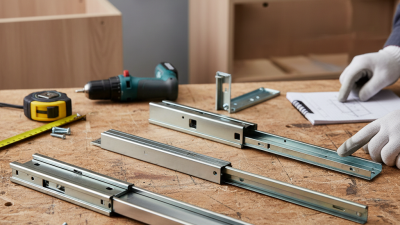
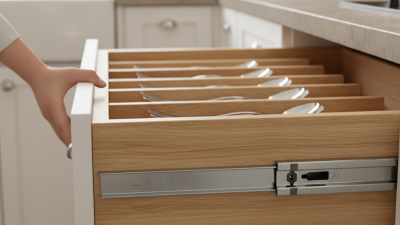
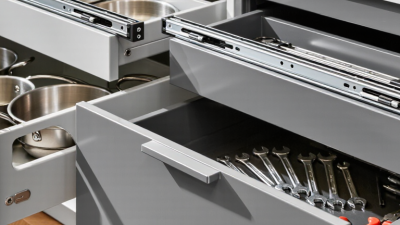
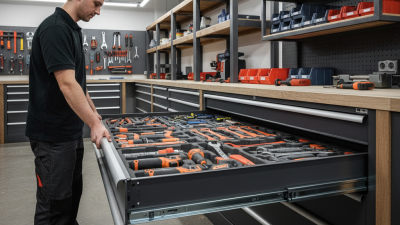
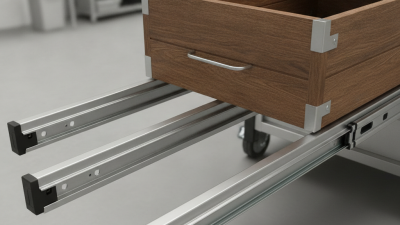
Heavy Duty Drawers are used in service vehicles, workshops, industrial cabinets, and storage systems where ordinary slides may not be enough. For global buyers, choosing a supplier in China involves more than comparing prices. Load capacity, extension length, steel thickness, finish, and cycle testing all affect performance after installation. Small details matter. A drawer that binds under load can slow daily work and frustrate end users.
This guide introduces China-based suppliers and the practical questions buyers can ask before requesting samples or quotations. Check whether stated load ratings apply to a pair of slides or an individual slide, and whether testing reflects real operating conditions. Ask for drawings, material specifications, packaging details, and inspection records. These documents help clarify what a quotation includes. They also make comparisons more useful.
Communication deserves equal attention. Confirm production lead times, sample availability, customization limits, and how the supplier handles defects or dimensional changes. A polished catalog is helpful, but it cannot replace a physical sample or clear written specifications. Some suppliers may offer broad product ranges; others may focus on particular sizes, locking features, or mounting styles. Neither approach is automatically better. The right fit depends on your application, order volume, and quality requirements. Even a careful review cannot remove every sourcing risk, so buyers should verify important claims independently and keep specifications in writing. This overview aims to make supplier research more grounded, though the final choice still requires judgment.
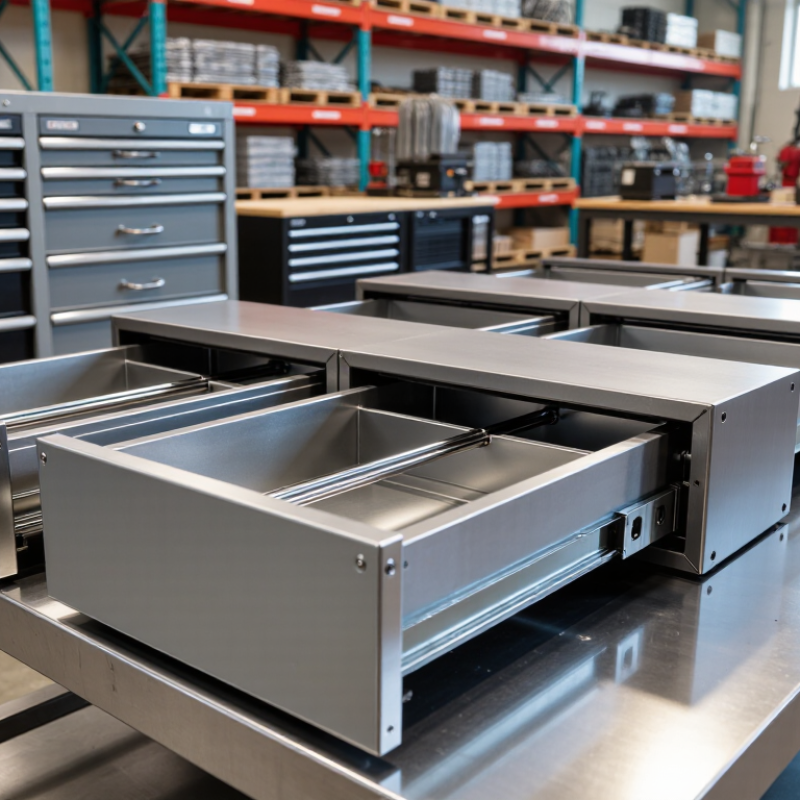
A heavy-duty drawer system is more than a larger drawer. It combines a reinforced drawer box, load-rated slides, secure fasteners, and a cabinet structure designed to carry repeated weight. The slides guide movement and help prevent sagging when drawers hold tools, parts, or supplies. Smooth travel matters. A drawer that sticks under load can slow work and create avoidable strain.
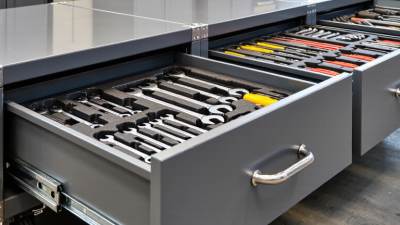
These systems are common in workshop benches, service vehicles, industrial storage cabinets, and commercial kitchens. A mechanic may store dense hand tools in a shallow drawer, while a maintenance team may need deeper storage for bulky equipment. In each case, the drawer’s dimensions, slide extension, and rated capacity should match the actual contents. A full-extension slide can make items at the back easier to reach, but it also needs enough clearance around the cabinet.
Capacity figures deserve careful reading. Some describe a pair of slides under specific test conditions, not every installed drawer in daily use. Mounting quality, cabinet material, and uneven loading can change performance. Even a strong slide may feel unreliable if screws loosen or the cabinet flexes. Buyers should check rated load, cycle testing, locking needs, and installation guidance before choosing a system. Ratings help, but they do not tell the whole story. A real workshop is rarely as tidy as a test setup.
Heavy-duty drawer slides made in China commonly include ball-bearing side-mount, telescopic, undermount, and locking designs. Side-mount slides suit workshop cabinets and tool chests, where visible hardware and straightforward replacement matter. Telescopic slides use nested steel sections to provide full extension, giving access to items at the back. Some models include a locking detent to keep a drawer secure in mobile equipment.
Undermount slides hide beneath the drawer and create a clean cabinet interior, but installation needs accurate spacing. For heavy loads, buyers should compare rated capacity, slide length, extension, and cycle-test conditions—not load figures alone. Ratings need context. A 100-kilogram rating can mean little if mounting differs from the buyer’s actual cabinet. Request test details and inspect samples under realistic loading.
China’s National Bureau of Statistics reported that furniture manufacturers above designated size recorded 655.7 billion yuan in revenue in 2023, down 4.4% year over year. This reflects the scale of China’s furniture manufacturing base, not the performance of any specific slide supplier. Ask suppliers for material specifications, corrosion-test results, and load-test records. One detail is easy to miss: drawer weight, mounting screws, and cabinet alignment all affect real-world performance.
Choosing a Chinese heavy-duty drawer supplier takes more than comparing quoted load capacities. Ask whether the rating is static or dynamic, and under what installation conditions it was measured. Request a test report tied to the exact slide model, not a general catalog page. Check steel thickness, bearing movement, locking features, and corrosion protection against your use environment. Small differences matter.
During sample review, load the drawer gradually and listen for scraping, uneven travel, or sudden drops. Measure closed alignment and side clearance with the cabinet built to your intended dimensions. Then cycle it repeatedly; a smooth first pull proves little. Ask how production tolerances are checked, how defects are recorded, and what happens when a batch fails inspection. Photos help, but they cannot replace dated inspection records or a sample from current production.
Evaluate communication as carefully as hardware. A dependable supplier should answer technical questions directly, explain product limits, and confirm lead time, packaging, spare parts, and customization in writing. Compare carton protection and pallet stability too; damaged corners can turn sound slides into costly rework. Do not treat a low price as proof of poor quality, either. That assumption deserves checking. Buyers sometimes approve samples too quickly, then discover that mass-produced units feel different. Keep the approved sample and inspection criteria documented before placing a larger order.
China’s heavy-duty drawer suppliers range from component specialists to integrated factories that stamp, form, plate, assemble, and test slides under one roof. Their capabilities matter more than a broad catalog. Ask for steel thickness records, ball-bearing grade, corrosion-test results, and load ratings tied to a stated extension length. Request cycle-test reports, too. A smooth sample can hide uneven performance across production batches.
The World Steel Association’s World Steel in Figures 2024 reports that China produced 1,019.1 million tonnes of crude steel in 2023. This scale supports a deep materials and processing network, but it does not prove any individual supplier’s quality. Buyers should compare factory audit findings, inspection plans, and traceability from coil to finished rail. Check whether the quoted load is static or dynamic, and whether testing used a pair or a single slide. Small details matter.
Profiles should also show practical manufacturing limits: available lengths, locking options, finish consistency, packaging protection, and realistic lead times. Ask how the supplier handles a failed batch. Clear answers build confidence. One weak point remains: published capacity figures can be difficult to verify. Independent audits and pre-shipment sampling provide firmer evidence than catalog claims.
A quick unit-conversion reference for global buyers comparing published load ratings. Values are calculated using 1 lb = 0.453592 kg and are not supplier product specifications.
Actual slide capacity depends on the specific model, installation, and test conditions. Check whether a supplier’s rating applies per slide or per pair.
Global buyers should compare heavy-duty drawer suppliers using the same drawings and specifications. Confirm slide length, mounting style, steel thickness, finish, and rated load in writing. A quoted load rating means little without its test conditions. Ask whether it applies to one drawer or a complete cabinet.
Request production samples before approving a large order. Check that drawers open smoothly under a measured load, close without scraping, and stay aligned after repeated cycles. Inspect welds, edges, coating coverage, and fasteners under bright light. Small gaps matter. Confirm packaging too: loose metal parts can scratch finishes during long-distance shipping. Review inspection records and clarify how defects are handled. A sample cannot guarantee every batch, so plan checks during production as well.
Tips: Share a signed specification sheet, not just product photos. Ask for dated test results and sample measurements. Keep one approved sample for comparison. If a supplier cannot explain a rating clearly, pause and verify it independently. That can slow purchasing, but guessing is worse. Also allow time for revisions; even careful buyers sometimes miss a mounting detail.
| Product / Application | Typical Configuration | Common Reference Range | Materials & Finish | Key Quality Checks | Buyer Evidence to Request |
|---|---|---|---|---|---|
| Ball-bearing slides Tool cabinets, storage drawers, industrial enclosures |
Side-mounted; full-extension or partial-extension; commonly sold as a left/right pair | Lengths commonly span about 250–1000 mm. Heavy-duty versions are often rated around 45–250 kg per pair, depending on length, installation, and test conditions. | Cold-rolled steel is common; zinc-plated or other specified corrosion-resistant finishes are available. Stainless steel may be specified for more corrosive environments. | Check extension, smooth travel, locking or disconnect features, pair matching, ball retention, mounting-hole positions, and permanent deformation after loading. | Dimensioned drawing, rated-load definition, loading-test report, finish specification, and samples from the production process. |
| Telescopic heavy-duty slides Vehicle bodies, machine drawers, mobile equipment |
Multi-member telescopic construction; full-extension options; with or without a lock or detent | Lengths often range from about 300–1500 mm. Published ratings vary widely; heavy-duty models may be specified from roughly 100 kg to several hundred kilograms per pair under stated test conditions. | Formed steel members with bearing elements; coating and corrosion protection should be specified for the intended environment. | Verify closed and extended length, travel, deflection, locking engagement, fastener clearance, cycle performance, and safe operation under the intended mounting orientation. | Load-test setup and results, cycle-test results, installation instructions, material/finish declaration, and agreed inspection limits. |
| Undermount heavy-duty slides Concealed industrial or specialist storage applications |
Mounted beneath the drawer; requires compatible drawer and cabinet geometry | Capacity and available lengths are model-specific. Compare only ratings with the same definition of load, extension, mounting, and test duration. | Steel slide members and matched hardware; finish and corrosion performance depend on the selected specification. | Check required clearances, drawer-depth compatibility, alignment, release mechanism, closing behavior, and load performance after installation. | Installation drawing, compatible drawer dimensions, sample-fit approval, rated-load conditions, and functional inspection checklist. |
| Locking slides Service vehicles, mobile workstations, and equipment exposed to movement |
Lock-in, lock-out, or both; configurations vary by slide design | Load capacity depends on the underlying slide model and mounting. Do not treat a slide’s static load rating as a vehicle-motion or impact rating. | Typically steel slide members with a mechanical locking mechanism; specify finish and operating environment. | Test positive engagement and release, vibration resistance as applicable, access to the release, repeated operation, and whether the lock is rated for the intended use. | Locking-mechanism drawing, functional test results, use limitations, and confirmation of any vehicle-specific validation requirements. |
| Corrosion-resistant slides Washdown areas, damp locations, or corrosive environments |
Material and finish selected for the exposure; stainless-steel construction may be appropriate for some applications | No single corrosion rating applies to all finishes. Performance must be tied to the specified material, coating, exposure, and test method. | Request the exact stainless-steel grade or coating specification. “Stainless” and “corrosion resistant” alone are not sufficient material declarations. | Inspect finish coverage and damaged edges; verify material identification and test method; assess whether bearings, fasteners, and lubricants suit the environment. | Material certificate where required, coating details, corrosion-test report with method and duration, and a production sample. |
| Incoming and pre-shipment checks Applicable across slide types |
Agree inspection criteria before production and use samples from the approved specification | Use a written inspection plan: dimensions, appearance, function, quantity, packaging, and any agreed sampling level. | Compare supplied goods with the approved drawing, material declaration, finish sample, and purchase-order requirements. | Measure critical dimensions; operate a sample; inspect burrs, corrosion, coating damage, noise, missing parts, and carton protection; record defects and corrective actions. | Signed specification, approved sample, inspection report with photos, packing list, and traceable batch or production-lot identification. |