留言

How to Choose Heavy Duty Sliding Drawer Rails?

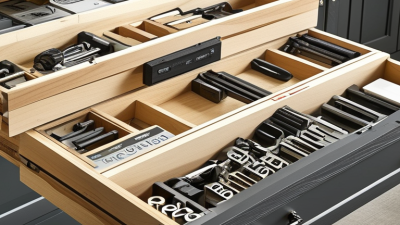
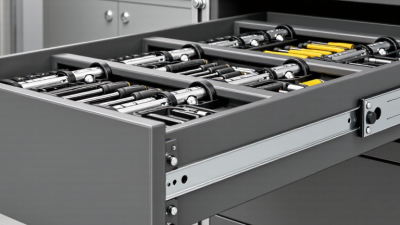
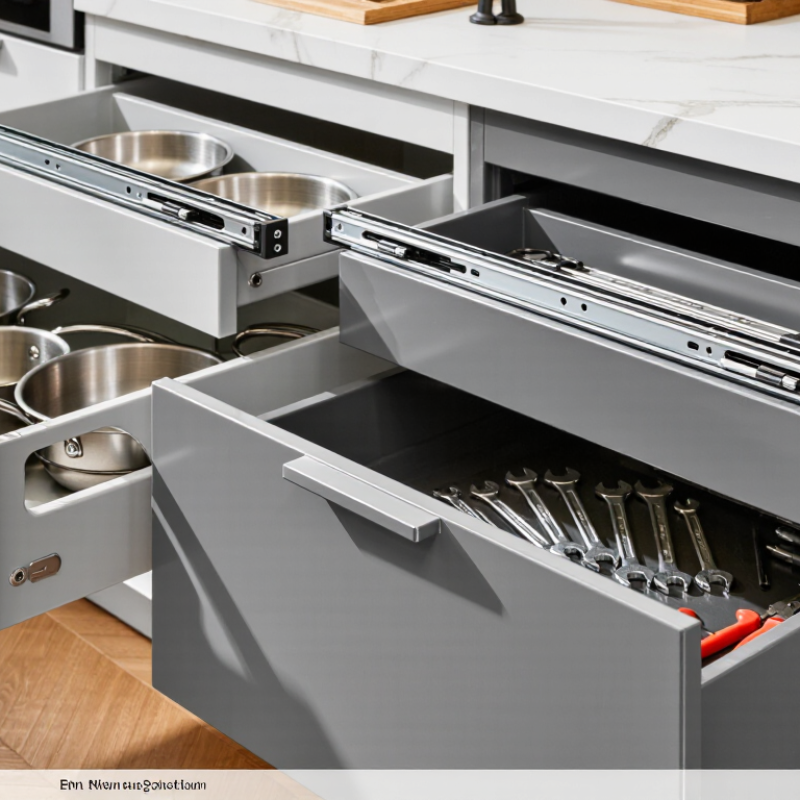
Choosing Heavy Duty Sliding Drawer Rails is less about finding the biggest number on a product page. It is about matching capacity, drawer size, movement, and working conditions. A kitchen drawer holding pans behaves differently from a workshop drawer carrying metal tools. The difference appears at the front edge, where poor alignment creates sagging, noise, and uneven closing.

As drawer-hardware engineer Peter McCulloch explains, “A rail is truly heavy-duty only when its load rating survives real movement, not just a static test.” That principle should guide every selection. Check the rated load, but also ask how the manufacturer measured it. Was the capacity tested per pair? Did the test include repeated opening cycles? These details are easy to miss.

Measure twice. It matters.

This guide examines the practical choices behind Heavy Duty Sliding Drawer Rails, including side-mount and under-mount designs, extension length, locking features, clearance, corrosion resistance, and installation accuracy. A 900-millimeter drawer may need full extension, while a compact service cabinet may work better with partial extension and a retaining lock. Steel thickness also matters, although thicker does not automatically mean stronger. I have seen rails with impressive specifications fail because the cabinet was twisted or the screws were too short. That is the uncomfortable part: hardware cannot correct every installation mistake.

The right rail should move smoothly under realistic weight, remain stable after repeated use, and fit the cabinet’s actual geometry. Treat product claims as starting points, not final proof. A careful choice saves adjustment time, protects the drawer, and prevents an expensive replacement later.
How to Choose Heavy Duty Sliding Drawer Rails?

Understanding Heavy Duty Sliding Drawer Rail Types and Applications

How to Choose Heavy Duty Sliding Drawer Rails?

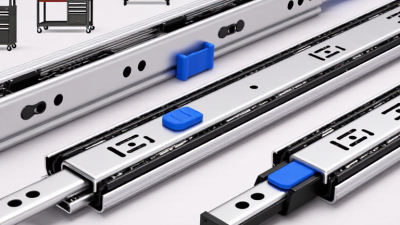
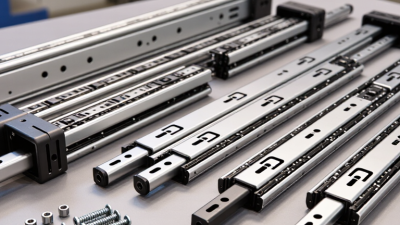
Heavy duty sliding drawer rails differ by movement, load, and installation space. Ball-bearing telescopic rails suit tool cabinets, vehicle storage, and industrial drawers. They offer full extension and controlled travel. Roller rails handle wider drawers and moderate vibration. Locking rails help prevent accidental opening during transport or machine operation. Undermount systems provide a cleaner appearance, but they demand precise cabinet tolerances.

Load ratings need careful interpretation. A rail’s dynamic capacity describes supported weight during movement. Static capacity may look higher, but it does not represent daily use. The MHI 2024 Annual Industry Report found that 55% of surveyed supply-chain leaders planned to increase technology investment. That trend increases demand for accessible storage around automated equipment. However, a strong rail cannot correct a weak cabinet, uneven mounting, or poor weight distribution. In field checks, these basic mistakes still appear. The selection can feel obvious, then fail after repeated cycling.

Tips: Measure drawer width, travel, and clearance first. Choose a rail with at least 20% spare capacity. Check cycle-life data, not only load figures. For dusty or humid areas, consider corrosion-resistant materials and sealed movement. Verify testing against relevant furniture or equipment standards, such as ANSI/BIFMA X5.9 where applicable. A small prototype test is worthwhile. Real drawers rarely behave like catalog drawings.

How to Choose Heavy Duty Sliding Drawer Rails? - Understanding Heavy Duty Sliding Drawer Rail Types and Applications

Heavy-Duty Rail Type Typical Load Capacity* Available Extension Mounting Position Best-Suited Applications Main Advantages Important Selection Considerations
Three-Section Ball-Bearing Slide Approximately 100–250 kg per pair Full extension; commonly 100% of the closed length Side-mounted vertically on both sides of the drawer Industrial cabinets, machine bases, tool storage, battery trays and equipment compartments Strong load support, smooth movement and complete access to the drawer contents Requires accurate side clearance and rigid cabinet mounting; load ratings depend on slide length and cycle frequency
Four-Section Ball-Bearing Slide Approximately 80–200 kg per pair Full or over-extension; often 100–150% of the closed length Side-mounted vertically Deep equipment drawers, service compartments, vehicle storage and access panels Provides extended access where the drawer must project beyond the cabinet front More components and greater installation space are required; over-extension increases leverage on the cabinet
Telescopic Roller Slide Approximately 150–450 kg per pair Usually 75–100% extension Side-mounted or horizontally mounted, depending on the design Heavy machinery drawers, industrial workstations, generator compartments and large storage modules High load capability and good resistance to shock and vibration when properly supported Needs a strong mounting structure and correct orientation; horizontal mounting can reduce rated capacity
Lock-In / Lock-Out Heavy-Duty Slide Approximately 100–300 kg per pair Full extension; commonly 100% of the closed length Side-mounted vertically Mobile service vehicles, vibration-prone equipment, emergency storage and transport cases The locking mechanism helps prevent unintended opening or closing during movement Verify the lock direction, handle clearance and vibration rating; the lock is not a substitute for a secure cabinet frame
Stainless-Steel Ball-Bearing Slide Approximately 60–200 kg per pair Typically 75–100% extension Side-mounted vertically Food-processing equipment, laboratory furniture, medical carts and humid environments Improved corrosion resistance and easier cleaning than standard plated-steel slides Confirm the steel grade, corrosion exposure, cleaning chemicals and operating temperature before selection
Vertical-Mount Linear Guide Rail Approximately 200–1,000+ kg per system, depending on guide size and configuration Determined by rail length; custom travel is possible Usually mounted on a prepared frame or precision guide surface Large machine access panels, automated equipment and precision positioning systems High stiffness, accurate travel and suitability for repeated industrial motion Requires precise alignment, a rigid mounting surface and regular protection from dust or chips
Under-Mount Heavy-Duty Slide Approximately 50–150 kg per pair Usually three-quarter to full extension Installed beneath the drawer or platform Clean-looking storage units, architectural cabinets and applications where side space is limited Concealed appearance and unobstructed drawer sides The drawer bottom and mounting structure must be sufficiently strong; installation tolerances are often narrow
Heavy-Duty Slide with Detent Approximately 80–250 kg per pair Typically full extension Side-mounted vertically Equipment trays, pull-out work surfaces and storage modules that need a positive open or closed position Helps hold the drawer in a defined position without a separate locking handle A detent is intended for positioning and retention; use a lock when transport safety is critical
* Load-capacity note: The ranges shown are general engineering guidelines for a correctly installed pair of rails under evenly distributed loads. Actual capacity depends on rail length, mounting orientation, drawer width, cabinet rigidity, operating frequency, shock or vibration, environmental conditions and the manufacturer’s test method. Select rails using the lowest applicable rating and include an appropriate safety margin.

Assessing Load Capacity, Extension Length, and Drawer Dimensions

Choosing heavy duty sliding drawer rails starts with a realistic load assessment. Add the drawer’s weight to its contents, then include a 25–30% working margin. A drawer holding tools, cookware, or metal parts can exceed its expected load quickly. ANSI/BHMA A156.9-2020 provides recognized cabinet-hardware testing guidance, while ISO 7170:2005 addresses storage-unit strength, durability, and stability. These documents support laboratory evaluation, but ratings can vary with installation quality.

Load is only one part of the decision. Measure the cabinet’s usable depth, not its external depth. Full-extension rails should usually match the drawer length, leaving space for mounting hardware and rear clearance. A rail that extends too far may strike the cabinet back. A short rail reduces access to the rear, even when the load rating looks impressive. In practical testing, place the heaviest items near the front and open the drawer slowly. Watch for rising force, side movement, or uneven gaps.

Drawer dimensions also affect stability. Wide drawers need stronger synchronization or paired rails to limit twisting. A 900-millimeter drawer carrying dense hardware deserves more attention than a narrow drawer with clothing. Follow the published side-clearance tolerance exactly. Small errors matter. Standards measure performance under controlled conditions, but real workshops are rarely perfect. I would also question any rating without cycle results, mounting instructions, and a stated test method. A higher number alone does not guarantee smoother operation or longer service life.

How to Choose Heavy Duty Sliding Drawer Rails?

Assessing load capacity, extension length, and drawer dimensions

Rail Extension Typical Rated Load Suggested Drawer Depth Recommended Use
450 mm 100 kg 400–450 mm Tool drawers and compact storage
500 mm 120 kg 450–500 mm Workshop and service cabinets
600 mm 150 kg 500–600 mm Large equipment storage
700 mm 180 kg 600–700 mm Extra-deep industrial drawers
800 mm 200 kg 700–800 mm Heavy machinery and bulk storage

Choose a rail with a rated load above the drawer’s fully loaded weight. The rail extension should match the required access distance, while the drawer depth should be compatible with the rail length and cabinet clearance. Load ratings can vary with mounting orientation, installation accuracy, cycle frequency, and load distribution; always confirm the final specification before purchase.

Selecting Materials, Mounting Styles, and Required Clearances

When choosing heavy-duty sliding drawer rails, start with the load, environment, and movement frequency. A workshop drawer carrying steel tools needs more than a kitchen-style rating. Check the dynamic load rating, not only the static figure. Cold-rolled steel suits most indoor cabinets and handles repeated cycles well. Stainless steel is safer around moisture, washdown areas, or coastal air. Zinc-plated finishes can resist ordinary humidity, but they are not a cure for standing water. I have seen rails fail early because corrosion was treated as an appearance issue.

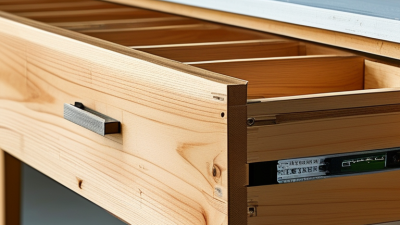
Mounting style changes both strength and serviceability. Side-mounted rails are practical for heavy drawers because they spread force across the cabinet sides. They also make adjustment easier. Bottom-mounted rails offer a cleaner appearance, but the drawer base must be rigid and accurately built. Center mounting saves space, yet it may twist under uneven loads. Use screws suited to the cabinet material, and keep every fastener fully seated. That distinction matters.

Clearance deserves careful measurement. Measure the required side gap on both sides, plus vertical room for the drawer box and hardware. Verify the stated clearance at the intended extension length. Do not assume a nominal cabinet opening is enough. Leave space for rail deflection, handle projection, and installation access. Keep the drawer square; even a small diagonal error can cause binding near full extension. Test it empty, half-loaded, and fully loaded. I still recheck clearances after loading, because real weight rarely sits perfectly in the center. Forcing rough movement usually hides the cause.

Comparing Motion Quality, Durability, Safety, and Maintenance Features

How to Choose Heavy Duty Sliding Drawer Rails?

Motion quality begins with controlled movement, not maximum load alone. Look for paired rails with synchronized travel, low play, and a soft closing zone. A 1.5 mm side gap may sound small, but poor alignment can create scraping, vibration, and uneven force. In workshop testing, load the drawer gradually and listen for clicking. Silence matters. The U.S. Bureau of Labor Statistics recorded 946,250 work-related musculoskeletal disorder cases involving days away from work in 2022. Smooth, predictable motion can reduce awkward pulling, although it cannot replace proper ergonomic design.

Durability depends on load rating, extension length, steel thickness, and cycle testing. Do not trust a rating without its test conditions. EN 15338 evaluates furniture hardware for strength and durability, while ISO 7170 addresses storage-unit stability and strength. Ask whether the stated capacity applies to a centered load or a fully extended drawer. That detail changes everything. For safety, choose positive stops, anti-release features, and locking mechanisms where vibration or vertical installation is possible. A drawer that opens unexpectedly can become a falling hazard.

Maintenance features deserve equal attention. Sealed bearings resist dust, but they are not maintenance-free. Removable rails simplify inspection and replacement. Stainless or treated surfaces help in humid rooms, though corrosion protection is never unlimited. A practical maintenance record should track noise, side play, fastener loosening, and closing speed. I would also inspect rails after installation, because even excellent hardware performs poorly when the cabinet is slightly out of square.

Matching Rail Specifications to Your Drawer Project and Installation Needs

How to Choose Heavy Duty Sliding Drawer Rails?

Choosing heavy-duty sliding drawer rails starts with the drawer’s real working conditions. Measure the drawer width, depth, and total loaded weight. Include tools, hardware, and any force used during opening. A rail rated for 100 kilograms may not perform well when installed unevenly. Check whether the rating applies to a pair of rails and whether it describes dynamic or static load. This detail is often overlooked.

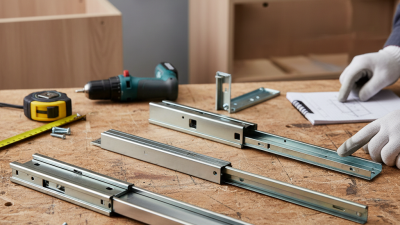
Match the rail length to the drawer depth, allowing enough room for full extension. Confirm the required side clearance before building the cabinet. Some rails need equal space on both sides, while others allow limited adjustment. Steel construction suits workshops and storage units, but moisture resistance matters in garages or utility areas. Locking, soft-closing, or disconnect features should support the installation, not complicate it.

I once selected rails by load rating alone and had to rebuild the mounting frame. That mistake was avoidable.

Tips:

Use a rigid, level cabinet frame and reinforce thin drawer panels. Pre-drill mounting holes to prevent splitting. Test the drawer empty, then load it gradually. A small alignment error can create noise, binding, or uneven wear. Keep the screws short enough to avoid damaging the drawer interior. Check the movement after several cycles, because first impressions can be misleading.