留言

7 Tips for Choosing Telescopic Guide Rails

Choosing Telescopic Guide Rails is not simply a matter of selecting the longest travel or highest load rating. The right rail must match the cabinet, machine, environment, and movement pattern. A rail that feels smooth in a showroom may bind when mounted on a slightly twisted frame. Small errors become expensive problems.

Dr. Alexander H. Slocum, an MIT professor and respected precision-machine designer, offers a useful principle: “Accuracy begins with controlling every source of movement.” That idea applies directly to Telescopic Guide Rails. Mounting flatness, rail alignment, bearing clearance, load distribution, and extension frequency all influence real performance. I have seen specifications look perfect on paper, yet fail because installers ignored uneven mounting surfaces. The lesson is uncomfortable.

Start with seven practical checks. Define the static and moving loads. Measure the available installation space. Confirm the required extension length. Examine side, vertical, or horizontal mounting conditions. Consider dust, moisture, temperature, and cleaning chemicals. Check cycle life instead of relying only on peak capacity. Finally, verify installation tolerances and maintenance access.

Do not trust one number.

A reliable selection process should include actual operating conditions, not ideal laboratory assumptions. A drawer carrying 80 kilograms behaves differently when opened unevenly. A rail exposed to metal chips needs different protection from one inside a clean instrument enclosure. Even experienced designers can overlook access space around fasteners. That mistake is easy to make and difficult to repair.

These seven tips provide a practical starting point for selecting Telescopic Guide Rails with greater confidence, fewer surprises, and better long-term value.

7 Tips for Choosing Telescopic Guide Rails

Define the Application and Required Travel Distance

7 Tips for Choosing Telescopic Guide Rails

Define the Application and Required Travel Distance

Start by describing the movement, not the rail. Will it support a sliding drawer, machine guard, service platform, or extending tray? Record the closed length, required travel, available width, and mounting direction. These details prevent an attractive but unsuitable selection.

Measure the real travel distance carefully. A rail rated for 500 millimeters may not provide that distance under full load or poor alignment. Allow space for stops, handles, cables, and maintenance access. I have seen projects fail because the designer measured the opening, not the useful extension. It was a small mistake with expensive consequences.

Calculate the moving load, including tools, panels, and impact during operation. Consider how often the rail will cycle each day. Dust, moisture, vibration, and temperature changes can affect performance, so the working environment matters. Check whether the rail needs side mounting, vertical mounting, or paired installation. Uneven loading can create binding and premature wear.

Keep the sketch practical.

Leave room for adjustment. A few millimeters may prevent trouble during assembly, although this allowance is sometimes overlooked. If the travel requirement is uncertain, test a physical sample under realistic load. The first estimate may be wrong. That is useful information, not failure. Record the test results and compare them with the supplier’s load, travel, and deflection data before finalizing the design.

Compare Load Capacity, Rail Size, and Extension Performance

7 Tips for Choosing Telescopic Guide Rails

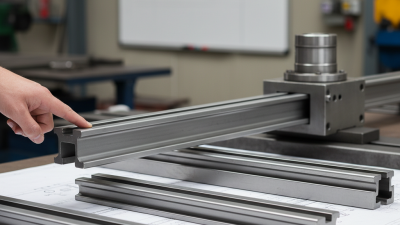
Compare load capacity, rail size, and extension performance before choosing a telescopic guide rail. First, calculate the real working load, including trays, tools, cables, and impact. Place the load’s center of gravity over the rail pair. A 100 kg load may create much higher force when it extends 500 mm. Use the manufacturer’s dynamic rating, not only the static figure. Add a suitable safety margin for vibration and uneven loading. Second, check rail size against cabinet depth, mounting space, and bending stiffness. Wider or thicker sections usually reduce deflection, but they also consume valuable space. Measure hole pitch carefully. Small errors can cause binding.

Third, compare extension ratios. A 75% extension leaves part of the tray inside; a 100% extension improves access. Fourth, examine stroke length, closed length, and clearance at full travel. Fifth, review cycle-life data under your actual load and speed. The International Federation of Robotics reported 541,302 industrial robot installations worldwide in 2023, showing why repeated motion deserves serious attention. Sixth, confirm acceleration limits, temperature range, corrosion resistance, and contamination tolerance. These details are often overlooked. Seventh, test the assembled system, not just the rail. The World Robotics 2024 report describes expanding automation demand, but it does not replace application testing. I have seen rated rails fail early when mounting surfaces were twisted. That mistake is easy to repeat. Select conservatively, then verify deflection, noise, and end-play during a loaded trial.

Select Materials and Protection for the Operating Environment

Telescopic guide rails must match the operating environment, not just the required load. Material selection affects service life, stiffness, noise, and maintenance. Stainless steel suits humid rooms, food-processing areas, and frequent cleaning. Carbon steel provides strong load capacity in dry, controlled spaces. Aluminum reduces weight, but it may lose stiffness under heavy loads. That choice looked efficient, but it failed. Environment matters.

Fine dust can enter small gaps and damage rolling surfaces. Sealed or shielded rails help protect internal components from abrasive particles. Washdown areas need corrosion-resistant materials and suitable protective finishes. Check whether the coating can survive detergents, water pressure, and repeated drying. Heat changes lubricant viscosity and can reduce smooth travel. In cold conditions, standard grease may become too thick. Do not overlook temperature cycling.

An experienced selection process starts with actual site conditions. Record humidity, dust type, cleaning methods, temperature, speed, and duty cycle. Then compare these details with the rail manufacturer’s technical data and test requirements. I once focused on static load and ignored side contamination. The rail operated correctly at first, but maintenance became frequent. That mistake was preventable. Protection also includes correct lubrication, wipers, covers, and alignment. Small details matter. Inspect the rail after installation, especially during the first operating weeks. Early wear patterns can reveal poor material choices, excessive contamination, or protection that is simply inadequate.

Evaluate Mounting Accuracy, Clearances, and Installation Needs

7 Tips for Choosing Telescopic Guide Rails

Evaluate Mounting Accuracy, Clearances, and Installation Needs

Measure twice before selecting a telescopic guide rail. Small errors compound.

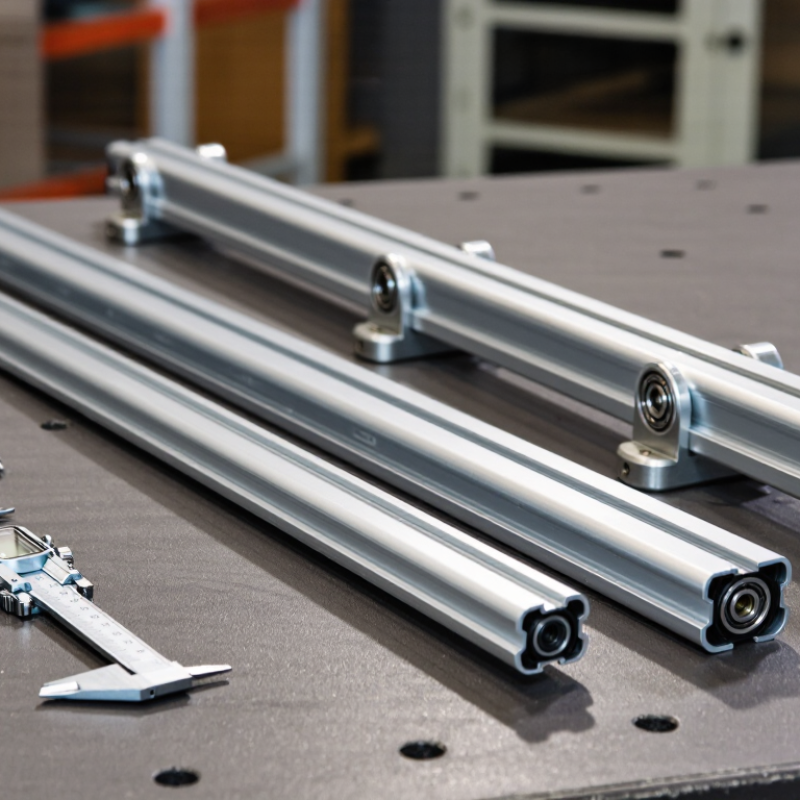
Check the cabinet and moving panel for flatness, parallelism, and twist. A rail cannot correct a badly aligned frame. Use a caliper to compare mounting points, and record the smallest measurement. Allow clearance for handles, cables, seals, and nearby hardware. Do not estimate this space by eye. It often causes unexpected binding. Consider the required extension length, load capacity, and load distribution. A heavy drawer supported from one side may need stronger guidance or additional support. Verify whether the load stays centered during movement.

Installation conditions matter just as much. Confirm whether installers can reach every screw location with the available tools. Leave room for adjustment, cleaning, and future replacement. Select mounting holes that match the structure, rather than forcing a convenient position. Use a rigid, level reference surface. Even accurate rails perform poorly on flexible panels. Follow the supplier’s technical data for fastener size, torque, orientation, and allowable deflection. Test the assembly through its full travel before final tightening. Listen for scraping or uneven resistance. These signs deserve attention. My field experience shows that early testing prevents many costly corrections, although I have also seen measurements fail when temperature changes were ignored. Recheck critical clearances after installation, especially in enclosed equipment where heat can alter alignment.

7 Tips for Choosing Telescopic Guide Rails

Suggested evaluation priorities for mounting accuracy, clearances, load performance, and installation needs

Mounting accuracy and load capacity should receive the highest attention because misalignment and overload can increase friction, noise, and premature wear. Check side clearances, fixing-point access, travel length, corrosion conditions, and maintenance requirements before final selection. The percentages represent a practical planning baseline and should be adjusted to the application.

Check Maintenance, Service Life, and Supplier Reliability

7 Tips for Choosing Telescopic Guide Rails

Check Maintenance, Service Life, and Supplier Reliability

Tip 1: Study the maintenance routine before checking the price. A guide rail should allow simple cleaning, inspection, and lubrication. Ask how often these tasks are required. Tiny metal particles can damage rolling surfaces quickly. Tip 2: Match the rail with the real load, stroke, speed, and installation position. Manufacturer data matters, but actual working conditions matter more. A rail used near dust or moisture may need stronger protection. Tip 3: Request service-life calculations based on your operating cycles. Do not accept a vague “long-life” promise. Service life depends on load distribution, alignment, lubrication, and impact. The estimate may still be imperfect.

Tip 4: Check whether replacement parts remain available after installation. A low-cost rail becomes expensive when one seal stops production. Tip 5: Review the supplier’s technical documents, testing methods, and tolerance information. Clear drawings show professional control. Tip 6: Test communication before placing a large order. Ask a difficult question. Reliable suppliers explain limits instead of hiding them. In my experience, quick replies are useful, but accurate replies are better. Tip 7: Confirm installation support and failure response. Written procedures can prevent avoidable damage. I once trusted a simple mounting instruction too much; slight misalignment caused uneven wear. That mistake changed my checklist. Choose a supplier willing to discuss maintenance records, expected wear, and realistic service conditions.

7 Tips for Choosing Telescopic Guide Rails - Check Maintenance, Service Life, and Supplier Reliability

Tip Selection Dimension Recommended Check Typical Practical Data Why It Matters
1 Match the load rating Compare the required static and dynamic load with the rail's rated capacity. Include the weight of the drawer, tray, tooling, and stored contents. Select a rated capacity at least 25% higher than the calculated working load; use a higher margin for shock, vibration, or uneven loading. Adequate capacity reduces deflection, premature wear, binding, and the risk of rail failure.
2 Verify installation dimensions Check closed length, extension length, rail height, side clearance, mounting-hole pattern, and installation orientation. Allow the manufacturer's specified side clearance; many side-mounted systems require only a few millimetres per side, but the exact value must be confirmed from the drawing. Small dimensional errors can cause misalignment, excessive friction, or incomplete extension.
3 Choose the correct material and finish Evaluate humidity, dust, chemical exposure, cleaning agents, temperature, and the possibility of corrosion. Zinc-plated steel is common for general indoor use; stainless steel is generally preferred for washdown, humid, or corrosive environments. Material and surface treatment directly affect corrosion resistance, smooth movement, and service life.
4 Assess movement and safety features Review extension percentage, travel smoothness, locking positions, stop design, holding force, and anti-separation features. Full-extension designs commonly provide approximately 100% access to the supported drawer or tray; locking requirements depend on the application. Controlled movement helps prevent accidental opening, over-travel, component separation, and operator injury.
5 Review maintenance requirements Confirm lubrication type, cleaning method, inspection interval, allowable contamination, and access for servicing. Inspect for dirt, corrosion, loose fasteners, abnormal noise, and uneven travel at regular intervals; lubrication frequency should follow the operating environment and manufacturer instructions. A simple maintenance routine helps preserve low friction and identifies problems before they become costly failures.
6 Estimate service life from duty cycle Ask for cycle-test data under a load and orientation comparable to the intended application. Record opening frequency and operating conditions. Service life is application-dependent; calculate annual cycles as cycles per day × operating days per year, then compare that figure with verified test data. Cycle count, load distribution, alignment, contamination, and impact usually influence life more than calendar time alone.
7 Evaluate supplier reliability Check technical drawings, material certificates, inspection records, sample consistency, lead time, warranty terms, and replacement availability. A dependable supplier should provide traceable specifications, documented quality checks, clear change-control procedures, and realistic delivery commitments. Reliable documentation and supply continuity reduce qualification risk, downtime, and unexpected replacement costs.
Practical selection note: Load ratings, clearances, cycle-life figures, lubrication intervals, and corrosion performance should always be confirmed against the supplier's current technical documentation and the actual installation conditions.