留言

7 Best Cabinet Runners Drawer Runners for Global Buyers

Choosing reliable cabinet hardware can be difficult when product names, measurements, and quality standards vary across markets. This guide examines seven practical options for global buyers seeking a dependable Cabinet Runners Drawer Runner solution. It focuses on details that affect daily performance, not just attractive catalog images.

In real kitchens, workshops, hotels, and office storage units, drawer runners face repeated opening cycles, uneven loading, dust, and occasional forceful closing. A runner that feels smooth on an empty drawer may struggle with cookware or heavy files. Buyers should compare load capacity, extension length, steel thickness, ball-bearing design, soft-close action, and mounting accuracy. Installation tolerance matters too. A few millimeters can cause rubbing, noise, or premature wear. Small details matter.

The review also considers corrosion resistance, packaging quality, replacement availability, and supplier communication. These factors can influence total cost more than the initial unit price. A product may look economical until damaged parts arrive without clear instructions. That risk deserves attention. Specifications should be verified through technical sheets, samples, and repeat-cycle testing whenever possible. Supplier claims are useful, but independent inspection provides stronger confidence. Global projects also require careful checking of dimensions, shipping conditions, and applicable product requirements in the destination market.

No single runner fits every cabinet. Some models offer excellent value, while others justify their price through smoother movement or stronger construction. The best choice depends on cabinet material, drawer weight, installation skill, and expected use. This guide aims to provide a balanced starting point, while admitting that real-world results can vary between batches and applications.
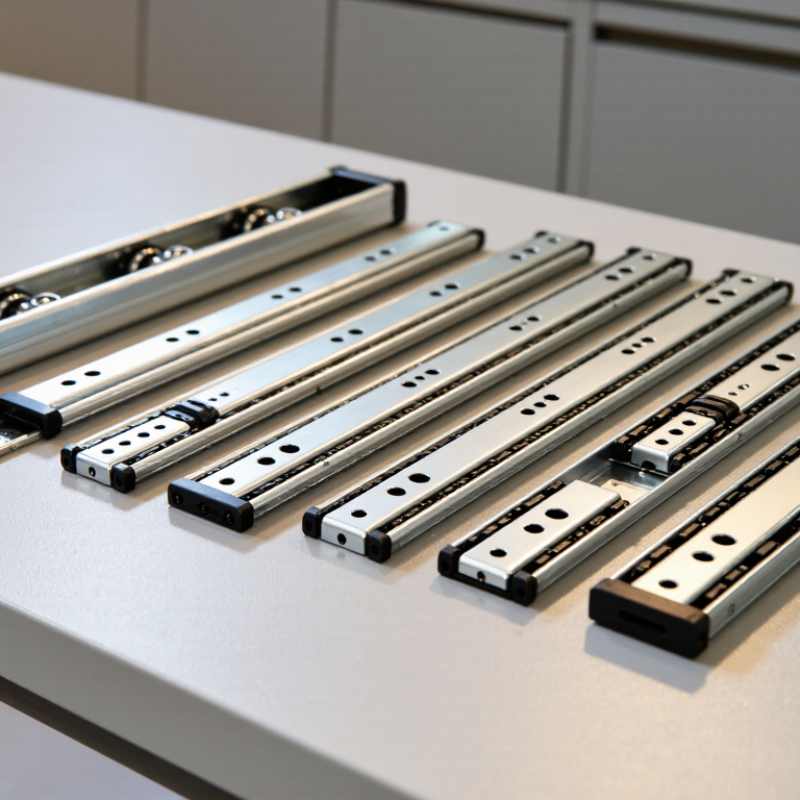
7 Best Cabinet Runners Drawer Runners for Global Buyers

Cabinet and Drawer Runner Basics for Global Buyers

Cabinet and Drawer Runner Basics for Global Buyers

Cabinet and drawer runners are the moving hardware behind smooth storage. They guide drawers, support weight, and control closing speed. For global buyers, the correct choice starts with cabinet size and drawer use. A concealed runner creates a clean appearance and often offers soft closing. A side-mounted runner is easier to inspect and replace. Check the cabinet width carefully. Small errors matter.

In practical fitting work, I measure the drawer box, opening, and mounting clearance twice. Full-extension runners let users reach the back of deep drawers. Partial-extension models may suit lighter, budget-focused furniture. Review the stated load rating with caution. Real capacity can change with drawer width, installation quality, and uneven loading. Steel runners provide strength, while corrosion-resistant finishes help in humid rooms. Soft-close mechanisms feel refined, but they need accurate alignment.

Global purchasing also requires clear technical communication. Confirm metric dimensions, hole positions, extension length, load testing, and packaging protection. Ask for samples before placing a large order. A runner that looks identical in a photograph may fit differently in production. Test ten opening cycles, then test it again with the intended load. Do not ignore noise, wobble, or rough travel. I have seen well-made runners fail because the cabinet side was slightly twisted. That lesson is easy to overlook. Installation instructions should show screw locations and adjustment steps in simple language.
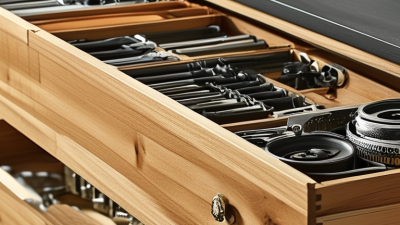
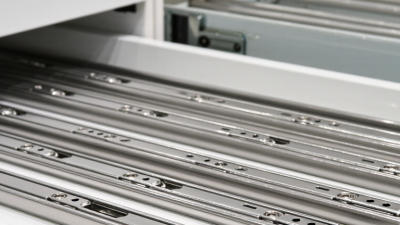
Seven Leading Drawer Runner Types and Their Key Features

Seven leading drawer runner types serve different cabinet needs.

Grand View Research valued the global furniture market at USD 516.66 billion in 2022. This scale increases demand for reliable, repeatable hardware. Side-mount ball-bearing runners suit general cabinets and offer smooth travel. Undermount concealed runners create a clean appearance beneath the drawer. Center-mount runners fit lighter drawers and older cabinet designs. Soft-close runners reduce impact and protect stored items from sudden movement. However, soft-close performance can weaken when drawers are overloaded.

Full-extension runners expose the entire drawer, improving access to rear storage. Push-to-open runners remove handles and support minimalist furniture layouts.

Heavy-duty telescopic runners carry deeper drawers, tools, and dense kitchen supplies.

Buyers should compare load ratings, extension length, corrosion resistance, and installation tolerance. ISO 7170:2021 provides a useful reference for furniture strength and durability testing. A runner may look excellent but fail under repeated uneven loading. That detail deserves attention.

Tips: Measure the cabinet opening at several points, not only once. Check drawer-box thickness before selecting side clearance. Test ten opening cycles with the intended load. Listen for scraping or delayed closing.

For export projects, request cycle-test records and load data from suppliers. Grand View Research also forecasts furniture market growth of about 5.2% annually from 2023 to 2030, making long-term maintenance increasingly important.

My practical preference is not always the most expensive runner; consistent installation often matters more. Mistakes still happen. Test early.

How to Choose Runners by Load, Extension, and Installation Method

Choosing cabinet runners starts with load, not appearance. A drawer holding cutlery may need only 18 kilograms, while a pantry drawer can exceed 35 kilograms when fully stocked. The 2024 NKBA Market Outlook places the U.S. kitchen and bath market above 200 billion dollars, showing why reliable hardware matters across residential projects. ISO 7170 testing also emphasizes durability under repeated opening cycles, not just a single weight test.

Measure the real load, then add a practical safety margin. Full-extension runners expose the entire drawer, which helps users reach rear items. Partial-extension models cost less, but they hide storage space. Side-mounted runners suit many retrofit projects and tolerate minor cabinet variations. Undermount runners create a cleaner appearance, yet they demand accurate drawer dimensions and a flat cabinet base. Face-frame cabinets may require rear brackets or spacers. Small errors matter. A drawer can look square and still bind.

Tips: Check whether the stated capacity applies per pair or per runner. Confirm the rating at full extension. Use slow-close mechanisms only when the runner supports the added resistance. Leave the manufacturer’s specified clearance on both sides, commonly around 12 to 13 millimeters for side-mount designs. The Freedonia Group’s cabinetry research identifies remodeling and replacement as major demand drivers, so installers should document screw positions, cabinet material, and measured clearances. My own practical warning is simple: a neat calculation can still mislead when users overload one drawer every day.

International Standards, Materials, and Quality Factors to Compare

For global buyers, the seven best cabinet runners are not chosen by load rating alone. The 2023 CSIL World Furniture Outlook shows that a small group of major markets represents roughly half of global furniture production and consumption. This makes cross-border compatibility essential. Check EN 15338 for sliding hardware testing and ISO 7170 for storage-unit strength. These references help compare opening cycles, stability, and deformation. However, standards do not remove every risk.

Cold-rolled steel offers practical strength and controlled manufacturing costs. Stainless steel performs better in humid kitchens and coastal warehouses. Aluminum reduces weight, but its rail can bend more easily under uneven loads. Polyoxymethylene rollers usually provide smooth movement and low friction. Compare zinc plating thickness, salt-spray results, screw-hole accuracy, and rated load at full extension. A 45 kg rating means little if the drawer box twists. I have seen attractive runners fail because installers used short screws. That detail is easy to miss.

Tips: Request test reports, not only catalog claims. Ask whether the load rating covers one drawer or a complete set. Check results at 40°C and high humidity when exporting. Measure the closed gap, side clearance, and cycle count. A trial sample is wiser than a perfect spreadsheet. Allow for imperfect cabinets; real projects rarely align exactly.

Sourcing, Pricing, and Supplier Checks for Global Purchases

7 Best Cabinet Runners Drawer Runners for Global Buyers

Global buyers should compare cabinet runners by load rating, extension length, material, and installation method. The seven practical options include side-mount ball-bearing, undermount, soft-close, push-to-open, full-extension, heavy-duty, and concealed runners. Each design suits different cabinet structures and user expectations.

Pricing depends on steel thickness, surface treatment, testing standards, order volume, and packaging. Ask suppliers for clear quotations that separate product cost, tooling, samples, cartons, and shipping terms. Request technical drawings and sample units before placing a large order. Check rail smoothness, closing force, noise, hole accuracy, and corrosion resistance. A reliable supplier should provide inspection records, material details, and consistent production samples. One quotation looked attractive in my experience, but weaker steel caused visible bending during testing.

Tips: Compare at least three suppliers. Measure the drawer carefully. Confirm the required load under real use, not only laboratory conditions. Ask whether prices change with different finishes or packing methods. Check the supplier’s factory capacity, response time, quality system, and export experience. Video inspections can help, but they cannot replace physical samples. Keep a written checklist for every quotation. Mistakes happen. Reviewing them early is cheaper.

7 Best Cabinet Runners Drawer Runners for Global Buyers - Sourcing, Pricing, and Supplier Checks for Global Purchases

Runner Type Typical Applications Typical Load Rating
per Pair
Common Lengths Extension Typical Material and Finish Indicative Export Price
per Pair (USD)
Typical MOQ Key Supplier Checks Main Purchasing Risk
Concealed Undermount Soft-Close Runner Premium kitchen drawers, bathroom vanities, bedroom furniture and high-end cabinetry 30–40 kg 250–600 mm Usually full extension Cold-rolled steel; zinc-plated or electrostatic-coated components; polymer locking clips $2.80–$8.50 100–500 pairs Confirm cabinet and drawer clearances, adjustment range, locking clips, soft-close force, cycle-test results and installation drawings Fit problems caused by incorrect drawer-box dimensions or insufficient bottom clearance
Side-Mount Full-Extension Ball-Bearing Runner Office cabinets, wardrobes, general kitchen furniture and economical storage units 35–45 kg 250–700 mm Full extension Cold-rolled steel with zinc, black or white powder-coated finish; steel ball retainers $1.20–$4.20 200–1,000 pairs Verify nominal length, side clearance, member retention, smooth travel, load rating at full extension and corrosion-test records Actual load performance may be lower when the drawer is extended or poorly mounted
Side-Mount Soft-Close Ball-Bearing Runner Mid-range residential furniture, kitchen drawers and filing compartments 35–45 kg 300–600 mm Full extension or near-full extension Steel runner sections; zinc-plated or powder-coated surface; hydraulic damping unit $2.20–$6.50 200–1,000 pairs Request opening-force data, closing-speed consistency, oil-leak inspection, temperature testing and minimum drawer weight Soft-close performance can vary with temperature, drawer weight and installation alignment
Heavy-Duty Telescopic Runner Tool cabinets, industrial storage, pantry pull-outs, machine enclosures and large drawers 80–120 kg 400–1,200 mm Full extension; some models offer over-travel Thicker cold-rolled steel; zinc-plated, black zinc or industrial powder-coated finish $8.00–$28.00 50–300 pairs Check load-test position, mounting-hole strength, deflection, safety lock, anti-disengagement feature and corrosion resistance Load ratings are not directly comparable unless the test length, mounting orientation and drawer construction are identical
Push-to-Open Concealed Runner Handleless kitchen furniture, modern wardrobes, media units and minimalist cabinetry 25–40 kg 250–600 mm Usually full extension Steel runners with concealed polymer push-latch and adjustable release mechanism $3.50–$10.00 100–500 pairs Test trigger sensitivity, opening distance, accidental-release resistance, drawer-face alignment and cycle durability Push force and release behavior may change if the cabinet is not square or the drawer face is misaligned
Center-Mount Roller Runner Light-duty drawers, bedside tables, small cabinets and cost-sensitive furniture 15–25 kg 250–550 mm Partial extension, commonly about three-quarter extension Formed steel channel with nylon or polymer roller; zinc-plated or painted finish $0.45–$1.80 500–2,000 pairs Confirm centerline position, roller wear, drawer tilt, noise level, stop strength and packaging protection Limited extension and lower load capacity make it unsuitable for wide or heavily loaded drawers
Two-Way Opening or Double-Travel Runner Retail displays, hospitality furniture, island cabinets and access-from-both-sides storage 30–60 kg 300–800 mm Opening from both sides; model-dependent Steel telescopic sections with ball-bearing cages; plated or powder-coated finish $4.50–$16.00 100–500 pairs Confirm opening direction, center-stop design, anti-pull-out function, synchronized travel and installation tolerances Higher alignment sensitivity and greater packaging requirements during international shipping
Pricing and sourcing note: The price ranges are indicative budgeting levels for standard steel drawer runners sold in commercial export quantities. They can change with length, steel thickness, finish, soft-close or push-to-open mechanisms, packaging, tooling, inspection requirements, shipping terms and order volume. Confirm the final quotation using the same specification, quantity and Incoterm.
Supplier Verification Area Documents or Evidence to Request Recommended Acceptance Check
Company and production capability Business registration, factory address, product catalogue, production photos and recent export references with confidential information removed Match the legal entity, factory location, quotation entity and bank-account beneficiary before placing an order
Technical specification Dimension drawings, material grade or thickness, finish specification, load-test method and installation instructions Approve a signed sample or golden sample and define allowable dimensional tolerances in the purchase contract
Durability Cycle-test report, load-test report and corrosion-test report; ISO 9227 or ASTM B117 may be used where appropriate if the test conditions are clearly stated Check cycle count, applied load, extension length, mounting method, corrosion exposure time and failure criteria
Quality control Inspection plan, control points, defect classification, calibration records and batch traceability procedure Use pre-shipment inspection covering dimensions, smooth travel, locking, noise, finish, accessories and carton quantity
International logistics Carton dimensions, gross weight, pallet details, packing photographs, HS-code proposal and Incoterm quotation Calculate landed cost including product price, inspection, inland transport, freight, insurance, duty, tax and destination charges
Compliance and responsible sourcing Material declarations, restricted-substance statements, packaging information and any destination-market compliance documents Confirm requirements for the importing country and product category; do not rely on an unverified generic compliance logo