Why Choose Soft Close Drawer Slides?
Why Choose Soft Close Drawer Slides?
A drawer should open smoothly, carry its load, and close without a sharp wooden bang. Soft Close Drawer Slides support that everyday experience through dampers that slow the final movement. The result feels quieter, safer, and more controlled, especially in kitchens, bedrooms, and busy commercial spaces. Small detail. Noticeable difference.
Dieter Rams, a respected authority in functional product design, said, “Good design is as little design as possible.” That principle fits Soft Close Drawer Slides well. Their value is not decoration. It appears when a heavy drawer closes gently, even after repeated use. Reliable slides also help protect drawer boxes, cabinet frames, and stored items from sudden impact. However, the mechanism cannot correct poor installation. Cabinet alignment, drawer weight, slide length, and screw placement still matter. A high-quality slide may perform badly when the drawer is twisted or overloaded.
In practical selection, check the rated load, extension type, corrosion resistance, adjustment range, and tested cycle life. Side-mount and undermount designs create different visual and installation requirements. Consider the room, too. Humid kitchens may need stronger protective finishes. Children’s rooms may benefit from controlled closing movement. Nothing is completely maintenance-free. Dust, loose screws, and uneven cabinet walls can reduce performance over time.
Soft Close Drawer Slides are not a magical upgrade. They are a carefully engineered improvement. When matched correctly, they turn an ordinary drawer into a quieter, more refined part of daily life. That modest improvement is often what users remember.
What Are Soft Close Drawer Slides?
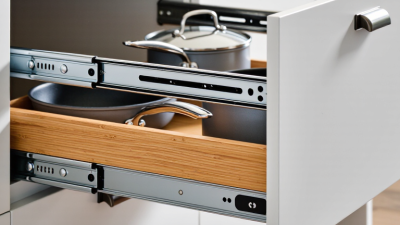
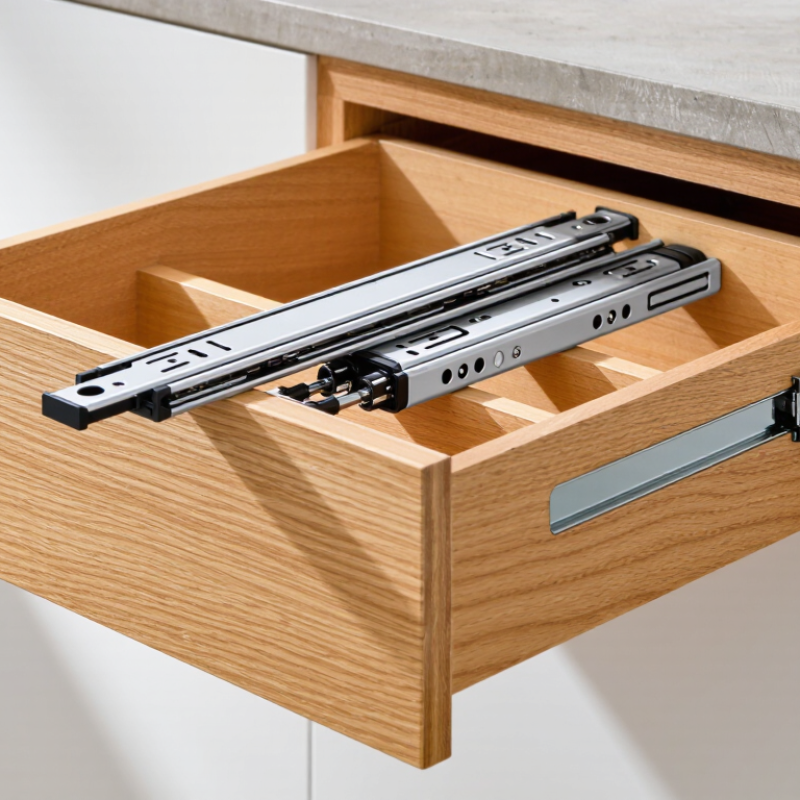
Soft close drawer slides are concealed or side-mounted runners with a hydraulic or pneumatic damping mechanism. When the drawer approaches its final few centimeters, the damper absorbs momentum and guides it inward. The result is a controlled, quiet closure instead of a sharp impact. That small movement protects drawer joints, reduces vibration, and feels more refined during daily use. It is practical engineering, not decoration.
76%
The 2024 Houzz U.S. Kitchen Trends Study reported that 76% of renovating homeowners upgraded their cabinets, showing strong demand for improved storage hardware.
Industry testing guidance, including ANSI/KCMA A161.1, evaluates drawer components for smooth operation, strength, and durability. Soft close slides support these goals, but only when their load rating matches the drawer and its contents.
I have seen overloaded drawers close slowly at first, then drift out of alignment. Installation matters more than many buyers expect. Cabinet width, mounting accuracy, screw quality, and drawer-box clearance all affect performance.
Some slides also lose damping strength in cold or dusty environments. They are not magic. A careful installer should check the alignment with the drawer empty, then test it with realistic weight.
The extra cost may feel unnecessary on a rarely used drawer, yet it becomes noticeable in kitchens, offices, and bedrooms where drawers open dozens of times daily. According to Grand View Research’s drawer slides market analysis, residential remodeling remains a key demand area, reinforcing the value of hardware that improves everyday use rather than appearance alone.
How Do Soft Close Drawer Slides Work?
Soft-close drawer slides work through a controlled deceleration system. A compact damper, usually hydraulic, resists the drawer during its final few centimeters. When the drawer approaches the cabinet, a catch engages and absorbs momentum. The drawer then glides shut instead of slamming against the frame.
The mechanism is simple, but its timing matters. A properly aligned slide keeps the drawer level, while the damper controls speed near closure. ANSI/BHMA A156.9 cabinet-hardware testing includes repeated-cycle performance requirements, with some slide classifications tested through 100,000 opening and closing cycles. That figure is useful, but it is not a promise for every installation. Dust, excessive loading, and uneven cabinet boxes can shorten service life.
Market research also shows why this feature remains popular. The 2024 Cabinet Hardware Global Market Report identifies soft-close hardware as a demand driver in residential renovation. Its discussion connects the feature with quieter operation, perceived quality, and longer cabinet usability. In practice, the difference is easy to notice: a full drawer of utensils stops softly, without a sharp wooden impact. Not perfect, though. A weak damper may struggle with heavy drawers, while an overly strong one can make opening feel stiff. Careful weight ratings and precise installation still matter.
What Benefits Do Soft Close Drawer Slides Offer?
Soft close drawer slides offer a quieter, safer, and more controlled daily experience. Their hydraulic or pneumatic dampers slow the drawer during the final few centimeters. The drawer closes gently instead of striking the cabinet frame. That matters in kitchens, bedrooms, and shared workspaces where repeated impact becomes irritating. The World Health Organization recommends indoor bedroom noise below 30 dB(A) at night for good sleep. A drawer slide cannot solve household noise, but reducing sharp closing sounds supports a calmer room.
Durability is another practical benefit. ANSI/BHMA A156.9 evaluates cabinet hardware through performance and cycle testing, helping manufacturers verify movement, strength, and endurance. Properly installed slides can also reduce stress on drawer boxes, fasteners, and cabinet joints. The Harvard Joint Center for Housing Studies projected U.S. remodeling expenditures near 450 billion dollars in 2023, showing how many homeowners are investing in long-term interior upgrades. Soft close hardware fits that expectation because it improves everyday touchpoints, not only appearance. It also limits finger-pinch risks for children, although it is not a complete safety device. They are not magic. Poor alignment, excess weight, or dust can still cause resistance and noise. In practical installations, checking the load rating and adjusting the drawer front often matters as much as choosing the mechanism.
What Should You Consider Before Choosing Them?
Soft close drawer slides can make a cabinet feel quieter, safer, and more refined. Yet the closing mechanism is only one part of the decision. Before choosing them, examine the drawer’s weight, size, and daily use.
Measure the drawer length carefully, including the available cabinet depth. A slide that is slightly too long may prevent full closure. Check the rated load as well. Heavy cookware, tools, or files need stronger hardware than folded clothing. Full-extension slides improve access, but they may require more installation space. Side-mounted and undermounted designs also differ in appearance, adjustment, and installation difficulty.
Think about the cabinet environment. Kitchens often contain moisture, grease, and frequent spills. Choose corrosion-resistant materials when practical, and leave enough clearance for smooth movement. Soft close works best when the drawer is aligned correctly. Even a quality slide can drag if the cabinet is uneven or the drawer box is twisted. A small adjustment may solve the problem, but poor measurements will not.
Test the closing action before installing every drawer. The movement should feel controlled, not weak or abrupt. Some mechanisms close slowly under light loads but struggle when overloaded. That detail is easy to miss. Also consider future maintenance, replacement access, and the installer’s experience. I once underestimated side clearance on a narrow cabinet, and the slide required repositioning. The mistake was minor, but it changed the final fit.
A quieter drawer is useful; a correctly fitted drawer is essential.