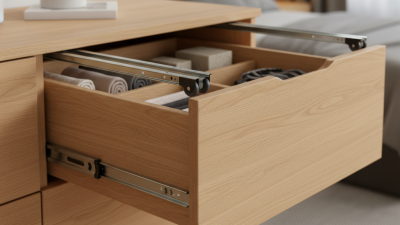
Why Choose Heavy Duty Long Drawer Slides?
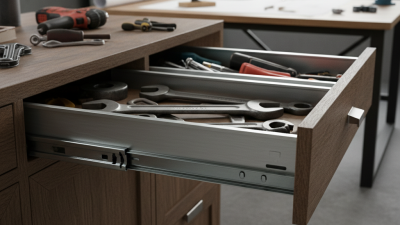
Long Drawer Slides Heavy Duty systems support more than smooth movement. They protect alignment, reduce sagging, and help drawers operate under demanding loads. In workshops, kitchens, service vehicles, and industrial cabinets, every millimeter matters. A fully extended drawer can become a lever. Poor hardware then bends, rattles, or jams.
Market data supports this practical concern. Grand View Research’s furniture market report identifies continued growth in modular and storage-focused furniture through 2030. The Freedonia Group also reports sustained demand for furniture hardware linked to renovation and replacement activity. However, these reports rarely isolate heavy-duty drawer slides. That gap deserves attention.
Paul McAlinden, former technical director at Accuride International, said, “A drawer slide is only as reliable as its installation.” The point is simple. Load capacity depends on slide length, mounting accuracy, drawer construction, and load distribution. A 1,000-millimeter slide cannot compensate for a twisted cabinet or undersized fasteners.
Choosing Long Drawer Slides Heavy Duty therefore requires more than reading a weight rating. Look for tested load figures, cycling performance, corrosion resistance, and suitable extension travel. Check whether the rating applies per pair or per individual slide. That detail is often missed.
Real experience can be less tidy. A drawer may feel stable empty, then sag when filled with tools. Engineers should measure twice, allow clearance, and test the worst case. Strong hardware helps, but careful design remains essential.
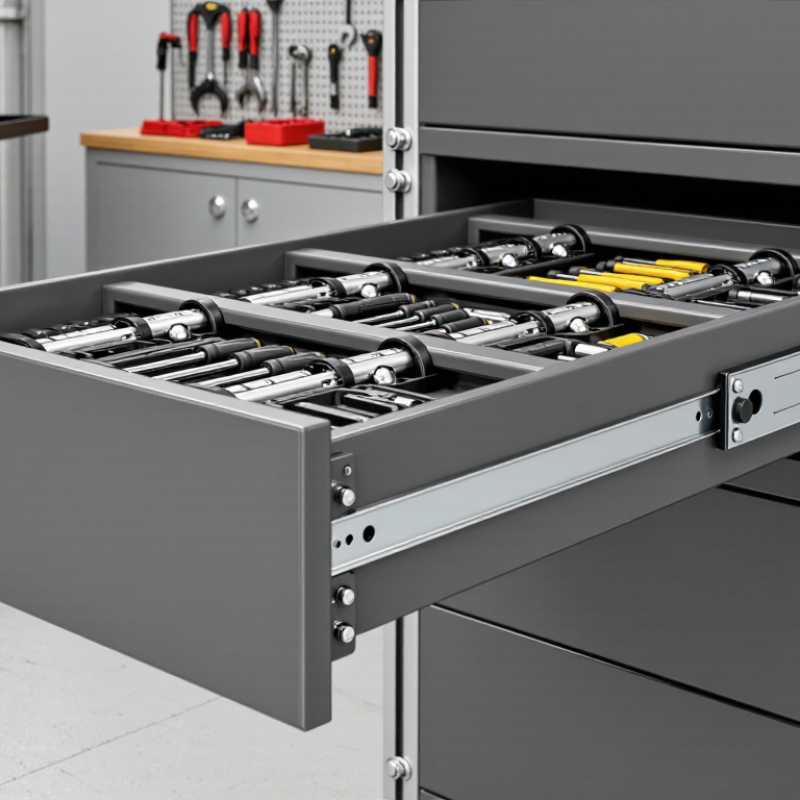
Heavy duty long drawer slides are metal rail systems designed to support wide, deep, or heavily loaded drawers. Unlike standard slides, they usually use thicker steel, reinforced mounting members, and multiple ball-bearing rows. Their long travel lets a drawer extend far beyond the cabinet opening. This improves access to tools, storage bins, machine parts, and other heavy items.
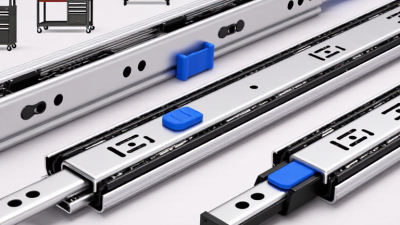
A typical slide includes an outer rail, an intermediate rail, an inner rail, and a locking or release mechanism. Load capacity depends on slide length, mounting position, drawer width, and installation accuracy. A slide rated for 250 pounds may not safely carry that weight when the drawer is poorly aligned. During cabinet fitting, even a small height difference can cause binding, noise, or uneven movement. Measure carefully. Keep both rails parallel.
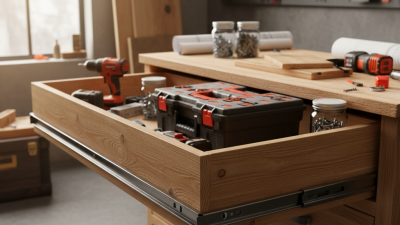
These slides are useful in workbenches, service vehicles, industrial cabinets, and large storage units. Choose a full-extension model when rear access matters. Choose a locking model when vibration or movement could open the drawer. Check the load rating under dynamic conditions, not only static storage. That detail is often overlooked. I have also found that users sometimes select the longest slide available, although cabinet depth and clearance should decide the size. Heavy hardware cannot correct a weak drawer box or loose fasteners. Proper screws, a rigid frame, and regular inspection remain essential. Performance varies with dust, moisture, and repeated impact. No slide is maintenance-free.
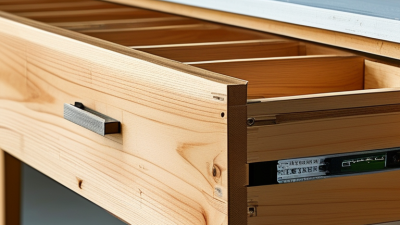
Heavy-duty long drawer slides use nested metal members that extend beyond ordinary cabinet runners. As the drawer opens, the inner members travel along ball bearings or rollers. These small moving parts spread the load and reduce friction. The slide’s locking stops hold the drawer in position during full extension. Some designs also include a disconnect feature for easier installation.
The working principle depends on accurate alignment. Both slides must sit at the same height and remain parallel. Even a small difference can create binding, uneven movement, or premature wear. A reinforced slide resists downward force when a long drawer carries tools, hardware, or stored equipment. Its load rating should match the drawer’s weight, not just the empty cabinet. Extension length matters too. A full-extension model lets the rear contents come within reach.
Installation experience often reveals details that product drawings miss. A drawer box that is slightly twisted may move smoothly when empty, then jam when loaded. That is easy to overlook. Measuring both diagonals can expose the problem. Secure fasteners, firm mounting panels, and a small clearance gap improve stability. Periodic inspection also helps identify loose screws, damaged bearings, or sagging members. Long slides are not automatically stronger in every application; excessive reach can increase leverage and deflection. Choosing the right length requires checking the drawer depth, load distribution, and actual opening conditions.
Heavy-duty long drawer slides provide full access to deep drawers while supporting substantial loads. As slide length increases, the allowable load typically decreases because the extended drawer creates a larger moment on the mounting points.
How do they work? Telescoping steel members move through nested channels, while hardened steel balls and retainers reduce friction and keep the members aligned. Full-extension designs allow the drawer to travel nearly its entire length, improving access and load distribution. The values shown are representative full-extension ratings for heavy-duty steel slide systems; actual capacity depends on mounting, drawer construction, installation accuracy, and duty cycle.
Why Choose Heavy Duty Long Drawer Slides?
Heavy duty long drawer slides support larger loads while keeping deep drawers stable and accessible. Their full-extension design allows users to reach items near the back without awkward bending or searching. In workshop cabinets, storage walls, and utility vehicles, this access can save time every day. I usually inspect the drawer material, expected load, and mounting surface before selecting a slide. A slide rated for 100 pounds should not regularly carry 100 pounds. A practical safety margin helps reduce wear, sagging, and sudden movement.
Long slides also improve weight distribution across the drawer structure. When properly aligned, they open with controlled resistance and close without harsh impact. Accurate installation remains essential. Even a small height difference between the two sides can cause binding. I have seen strong slides perform poorly because the cabinet was slightly twisted. That detail is easy to miss.
Choose carefully.
Reliable performance depends on clearance, fastener strength, and the slide’s travel length. Measure twice, especially when the drawer is deep or unusually wide. Consider corrosion resistance in humid workshops or outdoor equipment. Regularly check loose screws, bent members, and unusual noise. Heavy duty hardware is durable, but it is not indestructible. A drawer packed beyond its rating may still move at first, then develop uneven travel and permanent damage. Testing the loaded drawer before daily use is a small step, although it is often skipped.
| Evaluation Dimension | Standard Drawer Slides | Heavy Duty Long Drawer Slides | Key Benefit |
|---|---|---|---|
| Typical load capacity | Approximately 45–100 lb (20–45 kg), depending on the slide type and length | Commonly approximately 150–500 lb (68–227 kg), depending on the model and installation | Supports heavier tools, equipment, hardware, and storage contents |
| Available slide length | Usually selected for compact and medium-size drawers | Often available in extended lengths of approximately 24–60 in (610–1,524 mm) | Provides access to deep storage areas without removing the drawer |
| Extension type | Commonly three-quarter or full extension | Full-extension and over-extension options are commonly available | Improves visibility and makes items at the back easier to reach |
| Material and construction | Light- to medium-gauge cold-rolled steel is common | Typically uses thicker steel members, reinforced ball retainers, and robust mounting hardware | Improves structural strength and resistance to repeated loading |
| Operating stability | Suitable for lighter loads and moderate daily use | Designed to maintain smoother movement under higher loads when correctly installed | Reduces sagging, binding, and uneven drawer movement |
| Mounting requirements | Generally requires less cabinet reinforcement | Requires a rigid cabinet, accurate alignment, and fasteners suitable for the rated load | Promotes safer and more reliable operation in demanding applications |
| Typical applications | Home furniture, office storage, and light-duty cabinets | Tool cabinets, service vehicles, industrial workstations, machine enclosures, and warehouse storage | Matches demanding commercial, industrial, and mobile environments |
| Maintenance and service life | Suitable when load and usage remain within the rated limits | Better suited to frequent cycling and heavier contents when maintained and correctly rated | Can reduce premature wear caused by overloading ordinary slides |
| Selection priority | Low cost, compact size, and basic drawer access | Rated load, slide length, extension, mounting space, and duty cycle | Helps ensure the slide is selected for the actual working conditions |
Note: Load ratings are typical industry ranges. Actual capacity depends on the specific slide design, drawer width, mounting orientation, installation accuracy, load distribution, and usage frequency. Always follow the manufacturer’s rated specifications.
Heavy-duty long drawer slides are chosen for more than impressive load numbers. Before buying, compare rated capacity, extension length, mounting accuracy, and cycle testing. A slide supporting 100 kilograms may require that load to be evenly distributed, not concentrated near the drawer front. Ask whether the rating covers static storage or repeated opening. They are not the same.
ANSI/BHMA A156.9-2020 specifies testing levels of up to 100,000 cycles for Grade 1 drawer slides and 25,000 cycles for Grade 2 products. That difference matters in tool cabinets, service vehicles, and industrial workstations. Full-extension travel is also practical. It lets users reach rear tools without leaning over the drawer. However, longer slides need a rigid cabinet and precise side-to-side alignment. I once focused on length and ignored cabinet deflection. That mistake caused rough movement.
Material and surface protection deserve close inspection. Steel construction improves stiffness, while ball-bearing systems can support smoother movement under heavy loads. Check the disconnect feature, locking position, clearance, and replacement parts before installation. Corrosion protection is not cosmetic. The NACE IMPACT study estimated global corrosion costs at about 3.4% of worldwide GDP, or roughly 2.5 trillion dollars annually. In humid workshops, zinc plating or a stronger protective finish can extend service life. Salt spray data helps, but it should not replace real-site judgment. A clean specification sheet is useful. It is never the whole story.
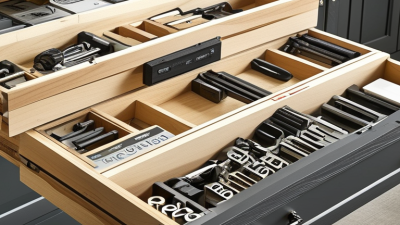
Heavy duty long drawer slides suit tool cabinets, mobile workbenches, storage islands, and industrial drawers. Their extended travel allows users to reach items at the back without lifting everything out. They are especially practical for deep drawers holding hand tools, hardware, kitchen equipment, or maintenance supplies. These slides need room. Measure the cabinet depth, drawer width, and opening height before choosing a model.
Check the rated load carefully. A drawer carrying metal parts needs more capacity than one holding textiles. Divide the expected weight between the slide pair, then allow extra capacity for movement and uneven loading. Full-extension designs require accurate alignment along both sides. Even a small height difference can cause binding, noise, or premature wear. Use a rigid drawer box, suitable screws, and reinforced mounting areas. Thin panels may flex under repeated loads.
Installation is easier on a level work surface. Mark both sides from the same reference line, and pre-drill holes to reduce splitting. Keep the specified side clearance consistent from front to back. Test the drawer before tightening every screw.
I once blamed the slides for rough movement, but the cabinet was slightly twisted. That mistake changed my inspection routine.
Open the drawer gradually, check for rubbing, and retighten loose fasteners after initial use. In humid areas, protect unfinished wood and inspect metal surfaces regularly. Temperature changes can also alter clearances, a detail that is easy to overlook.