China remains a major sourcing base for industrial hardware, including Heavy Duty Shelf Slides used in cabinets, tool storage, mobile workstations, and warehouse systems. Industry reports from Grand View Research and Mordor Intelligence show continued growth in global furniture and storage-equipment demand, supported by e-commerce, modular interiors, and compact commercial spaces. However, these reports rarely separate shelf slides as an independent category. That limitation matters. Supplier comparisons should not rely on attractive market figures alone.
A reliable review of China’s top suppliers should examine load capacity, full-extension performance, steel thickness, locking options, corrosion resistance, and cycle-test results. A slide rated for 100 kilograms may fail when the load is uneven or repeatedly opened. Real testing is essential. Look for documented quality systems, such as ISO 9001 certification, and request inspection records before placing a large order. ANSI/BIFMA storage-furniture standards can also provide useful reference points, although they may not cover every industrial application.
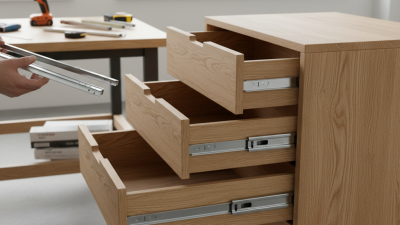
Factory experience becomes visible in small details. Check mounting-hole accuracy, smooth movement under side pressure, and packaging around the bearing tracks. Ask whether load ratings describe one pair or a complete set. This wording is often overlooked. Strong suppliers usually provide technical drawings, samples, test feedback, and traceable production information. Still, no supplier is perfect, and online claims can be incomplete. A careful buyer should compare several manufacturers, test samples under realistic conditions, and review the results with an engineer before choosing a long-term partner.
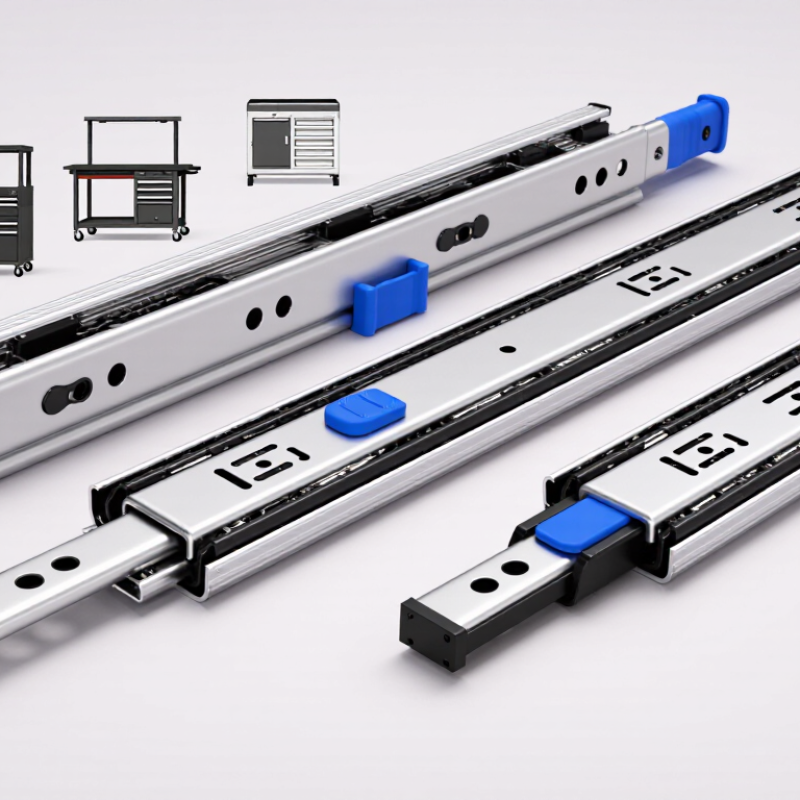
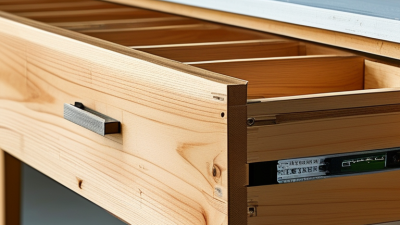
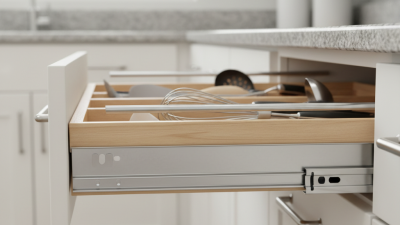
Heavy-duty shelf slides are load-bearing hardware that lets deep shelves move smoothly from a cabinet. Unlike ordinary drawer runners, they support heavier equipment, tools, pantry goods, or storage bins. Many models use steel channels, ball-bearing systems, locking features, and full-extension travel. Full extension exposes the rear of a shelf, improving access in workshops and commercial storage areas.
Capacity is the key specification. Industry products commonly range from about 100 to 500 pounds, depending on slide length, installation method, and load distribution. A 2024 Grand View Research analysis identifies load capacity, extension type, and corrosion resistance as important purchasing factors in the drawer-slide market. These points matter when comparing heavy-duty shelf slide suppliers in China. However, rated capacity is not a promise for every installation. The rating often assumes horizontal mounting, correct fasteners, and evenly distributed weight. Real cabinets are less perfect.
Measure carefully. A 900-millimeter shelf creates more leverage than a short drawer. Side clearance, cabinet material, cycle frequency, and vibration can reduce performance. ANSI/BHMA A156.9 provides recognized requirements for cabinet hardware performance, while suppliers should also provide load-test methods and cycle-test results. Ask for test conditions, not only attractive numbers. Stainless or coated steel may suit humid workshops, but coatings can still wear at contact points. Small details decide reliability. A careless measurement can defeat excellent hardware.
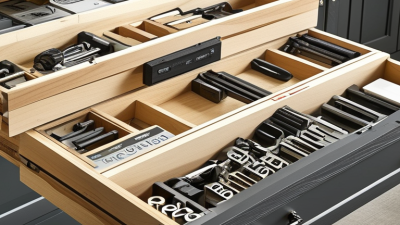
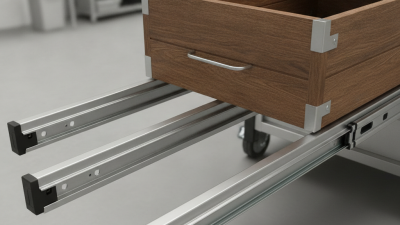
Heavy-duty shelf slides are telescoping drawer-slide mechanisms designed to support pull-out shelves, trays, and equipment under substantial loads. The representative load-rating levels shown below are commonly available in the market and are normally specified per pair. Actual capacity depends on slide length, installation method, cycle life, and whether the load is evenly distributed.
When evaluating China’s top heavy-duty shelf slide suppliers, buyers should begin with key specifications, not catalog photos.
Load capacity is the critical figure. It should describe one pair, full extension, and a defined mounting position. A 100 kg rating sounds strong, but uneven loading can reduce real performance sharply. Specify the safety factor and test method.
ANSI/BHMA A156.9 provides useful guidance for cabinet hardware performance and durability testing.
Extension length also affects usability. Full-extension slides should expose the rear of a 600 mm shelf without binding. Check closed length, travel, side clearance, and vertical adjustment tolerance. For steel storage units, 19 mm side clearance per slide is common, but the supplier must confirm this value. A small error can create rubbing, noise, or early wear. It happens more often than buyers expect.
Cycle life deserves equal attention. Ask for tested opening cycles, load conditions, and failure criteria. A 2024 industrial hardware market analysis by Grand View Research identifies durability and load performance as major purchasing factors in commercial hardware.
Surface protection matters too.
ISO 9227 salt-spray testing can help compare corrosion resistance, although laboratory hours do not perfectly represent humid warehouses. Ball-bearing slides usually deliver smooth travel, while roller designs may tolerate dirt better. Neither choice is automatically superior. Verify temperature range, locking function, mounting-hole accuracy, and replacement-part availability before approving samples.
China’s scale matters, but scale does not prove slide quality. CSIL’s World Furniture Outlook 2024 estimates China produces about 40% of global furniture output. That depth supports steel sourcing, tooling, and replacement capacity. The World Steel Association reported 1.019 billion tonnes of Chinese crude steel in 2023, representing 53.9% of world production. However, buyers should compare the component, not the country.
Ask each supplier for tested load ratings at full extension, not attractive static claims. Record the load, slide length, deflection, cycle count, and mounting orientation. Request test reports with dates, sample numbers, and laboratory methods. For warehouse shelves, check whether the rating applies to one pair or one slide. That small distinction changes real capacity. Measure running force after repeated cycling. A smooth first pull proves little. Independent testing is preferable. ISO 9001 certification can indicate process control, but it does not certify load performance.
Compare steel thickness, ball-retainer design, locking options, corrosion protection, and tolerance control. Ask for salt-spray results under a named method, because hours alone can mislead. Compare tooling ownership, minimum order quantity, lead time, packaging, and replacement policy. Audit a production batch before signing a long contract. Photographs are useful. But they are not evidence. A spreadsheet can still mislead. Many quotations omit deflection data, although two slides with identical ratings may behave differently on a loaded shelf.
Selecting heavy duty shelf slide suppliers in China requires more than comparing load ratings. Experienced buyers inspect steel thickness, ball cage alignment, mounting-hole accuracy, and surface treatment. A slide may claim 150 kilograms, yet poor installation can reduce real performance. Request load tests under repeated opening cycles, not only static demonstrations. Listen for uneven movement. It often reveals hidden tolerance problems.
Manufacturing quality depends on controlled processes. Reliable factories use incoming material checks, stamping inspections, heat-treatment records, and final dimensional testing. Ask for samples from regular production lines, not specially prepared pieces. Check whether the slide remains smooth after dust exposure and repeated extension. Small details matter, such as burr-free edges, consistent coating, and secure detents. Documentation should match the physical sample.
Customization is equally important for industrial shelving, service vehicles, tool cabinets, and storage equipment. Suppliers may adjust length, extension, locking direction, mounting patterns, handle clearance, and corrosion protection. Share drawings with load points and installation angles. A basic drawing is rarely enough. Tolerances must be discussed early. In practice, communication can still fail, especially when technical terms are translated loosely. Confirm every change with a revised drawing and a pre-production sample. No supplier is flawless. Even a qualified factory needs ongoing audits, trial orders, and honest feedback from actual use.
China Top Heavy Duty Shelf Slides Suppliers?
Selecting a Chinese supplier for heavy duty shelf slides requires more than comparing prices. Start by defining the load, extension length, mounting space, and operating frequency. A slide rated for 100 kilograms may perform differently under uneven loading. Ask for tested capacity, not only a catalog figure. Request drawings with hole spacing and closed dimensions. Small differences can delay installation.
Evaluate the factory’s production experience and quality controls. Ask whether steel thickness, ball retention, coating, and travel force are checked during production. A reliable supplier should provide material details, inspection records, and clear sampling procedures. Request samples from the intended production line. Test them with repeated loading, side pressure, and partial extension. Do not rely on one smooth demonstration.
Communication is practical evidence. Notice how quickly the supplier answers technical questions. Vague replies may create larger problems later. Discuss packaging, replacement parts, lead times, and acceptable tolerances in writing. Independent inspection can verify quantity and dimensions before shipment. Certifications may help, but they do not replace performance testing. I have seen buyers focus too heavily on unit price and overlook installation labor. That choice often becomes expensive. A small pilot order is wiser, although it may feel slower. Leave room for improvement after the first test. Supplier selection is rarely perfect on the first attempt.
| Evaluation Dimension | Recommended Specification or Benchmark | Evidence to Request from a Chinese Supplier | Suggested Weight | Selection Notes |
|---|---|---|---|---|
| Rated Load Capacity | Select a rated capacity at least 25% higher than the maximum actual shelf load. Heavy-duty applications commonly require approximately 100–227 kg (220–500 lb) per pair, depending on slide length, installation, and load distribution. | Load-rating sheet, test method, fixture drawings, loading direction, pair-versus-single-slide rating, and test photographs or video. | 20% | Do not compare load ratings unless the suppliers use the same extension length, mounting position, and test conditions. |
| Extension Type | Full extension is generally preferred when the entire shelf must be accessible. Partial-extension designs may reduce cost but leave part of the shelf inside the cabinet or frame. | Closed and open length drawings, travel measurement, clearance requirements, and photographs showing the actual extension. | 10% | Confirm whether the stated travel is measured from the closed position to the usable end position. |
| Slide Length and Installation Clearance | The slide length should match the shelf depth and mounting structure. Side-mounted designs commonly require a defined side gap on each side; the exact gap must follow the approved drawing. | Dimensioned CAD drawing, tolerance table, mounting-hole pattern, screw specification, and required side clearance. | 10% | A small dimensional error can cause binding, uneven loading, or premature wear. |
| Material and Construction | Cold-rolled steel is common for heavy-duty slides. Compare steel thickness, ball-retainer design, bearing material, stop construction, and reinforcement at the mounting points. | Material certificates, steel-thickness records, cross-sectional drawings, component list, and incoming-material inspection records. | 10% | Material thickness alone does not determine load capacity; the complete slide structure must be evaluated. |
| Corrosion Protection | For dry indoor use, a suitable plated or coated finish may be sufficient. Damp, coastal, outdoor, or chemical environments require a finish validated for the intended exposure. | Plating or coating specification, salt-spray test report where applicable, surface-treatment process, and inspection standard. | 8% | Salt-spray hours should not be treated as a direct prediction of service life in every environment. |
| Cycle Life and Durability | Set a cycle target based on the application. A commercial or industrial shelf should be evaluated under representative load, speed, travel, and installation conditions rather than by unloaded cycling alone. | Cycle-test protocol, applied load, number of cycles, failure definition, test speed, lubrication condition, and post-test measurements. | 12% | Require testing on production-equivalent samples, not only laboratory prototypes. |
| Operating Smoothness and Noise | The slide should move without binding, excessive play, or abnormal noise at the specified load. Define acceptable opening force and visible deflection for the project. | Functional-test standard, opening-force measurement, deflection record, noise requirement, and approved golden sample. | 7% | Test samples in the final mounting orientation because cabinet alignment strongly affects performance. |
| Quality Management | A documented quality system, traceable inspection records, and controlled process changes are important for repeat orders. ISO 9001 certification can support process control but does not prove product suitability by itself. | Valid certificate scope, quality manual summary, control plan, inspection reports, corrective-action records, and lot-traceability procedure. | 8% | Verify that the certificate covers the manufacturing site and relevant product processes. |
| Compliance and Documentation | The required documents depend on the destination market and end use. Confirm applicable chemical, product-safety, packaging, and mechanical requirements before ordering. | Declaration of conformity where applicable, material declarations, restricted-substance information, technical file, labels, and packaging details. | 6% | Avoid accepting generic certificates that do not identify the exact product or applicable requirement. |
| Sampling and Pre-Shipment Inspection | Use production samples for fit, load, extension, finish, and packaging checks. Define acceptance criteria before mass production begins. | Sample approval record, inspection checklist, sampling plan, defect classification, inspection timing, and remedy procedure. | 5% | Keep an approved reference sample and signed drawing for comparison during production inspection. |
| MOQ, Lead Time, and Capacity | Evaluate minimum order quantity, sample lead time, production lead time, monthly capacity, holiday schedules, and the supplier’s ability to maintain the same specification at scale. | Written quotation, capacity statement, production schedule, raw-material availability, sample timeline, and contingency plan. | 4% | Obtain lead times for both the initial order and repeat orders; tooling or custom finishes may add time. |
| Total Landed Cost | Compare unit price together with tooling, packaging, inland transport, freight, insurance, duties, inspection, rejected goods, and replacement costs. | Incoterm-based quotation, carton dimensions, gross weight, packing list, tooling ownership terms, payment terms, and warranty policy. | 5% | The lowest unit price may not produce the lowest total cost if quality variation or freight volume is high. |
| Total Evaluation Weight | 100% | Select the supplier with the strongest verified overall score, not simply the lowest quotation. | ||
Note: Load ranges and performance expectations are general sourcing benchmarks. The final rating must be confirmed through application-specific testing, approved drawings, installation conditions, and a written supplier specification.