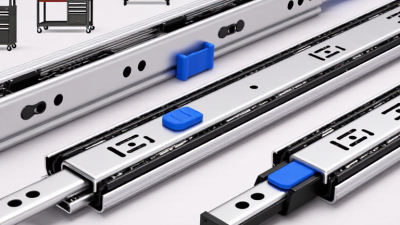
7 Tips for Choosing Soft Close Drawer Slides?
Choosing the right Soft Close Drawer Slides can change how a cabinet feels every day. A drawer should glide smoothly, close quietly, and remain stable under regular use. These details matter in kitchens, bedrooms, offices, and workshop storage.
In real projects, small mistakes become obvious quickly. A slide may fit the drawer but fail under a heavy cookware load. Another may close softly at first, then lose smoothness after repeated use. I have seen installers focus on price while overlooking slide length, load capacity, and side clearance. That decision often creates extra work later.
The seven tips in this guide focus on practical selection. They cover drawer dimensions, mounting styles, weight ratings, extension types, adjustment options, materials, and product reliability. Accurate measurements come first. Always check the manufacturer’s installation requirements. A few millimeters can affect alignment.
Look closely.
Quality evidence also matters. Product specifications, testing information, warranty terms, and consistent customer feedback can reveal more than attractive packaging. Trusted suppliers should explain performance limits clearly, not hide them behind vague claims. Still, no single slide suits every cabinet. That is worth remembering.
A reliable choice balances movement, strength, installation space, budget, and expected use. Before ordering, test the drawer’s weight and inspect the cabinet construction. These steps may feel slow, but they reduce avoidable failures. Soft Close Drawer Slides are not merely a convenience feature; they are part of the drawer’s overall safety, durability, and user experience.
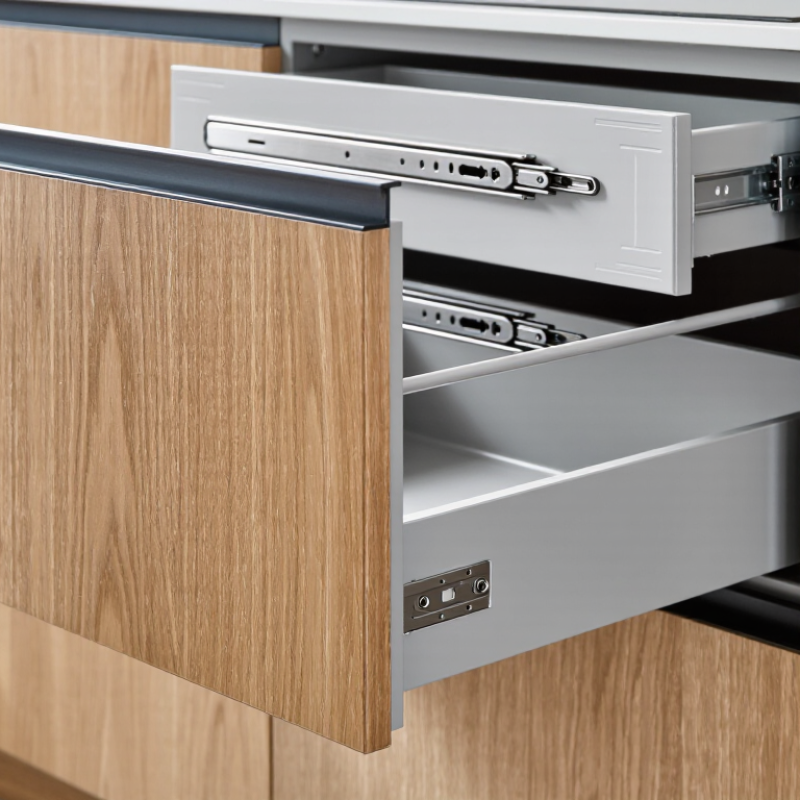
Measure Drawer Depth Against Available Slide Lengths and Cabinet Clearance
A drawer may look deep enough for a long slide, but the cabinet can tell a different story. Measure the drawer box from its front edge to its back, not the decorative drawer front. Then compare that depth with standard slide lengths available for your cabinet. A slide that is too long may hit the cabinet back; one that is too short can leave the drawer poorly supported.
Check the space inside the cabinet, too. Look for a face frame, rear brackets, plumbing, or a nearby door that could limit slide placement. Measure both sides, since older cabinets are not always perfectly square. A tape measure helps, but a second check can prevent an awkward surprise. I have found that writing down the usable depth and clearance is more reliable than measuring from memory.
Allow for the slide’s installation requirements, including any gap needed between the drawer and cabinet sides. Soft-close hardware may need a little room to engage smoothly. Test the fit with the drawer removed, and confirm the selected slide length against its installation guide. It is tempting to round up when a measurement falls between sizes. That can be a mistake. A slightly shorter slide may fit better, though it could reduce extension. The right choice depends on the cabinet’s actual clearance, not just the drawer’s depth.
Compare Manufacturer Load Ratings; Heavy-Duty Slides May Be Rated 100 lb or More
Soft-close slides should be selected by measured load, not by a “heavy-duty” label alone. Compare each maker’s published rating and check whether it applies to a pair of slides or to one slide. Some heavy-duty models are rated at 100 lb or more, but the rating may assume an evenly distributed load and correct installation. A stack of ceramic plates concentrated near the drawer front can behave differently. Check the technical sheet for test conditions, extension length, and cycle-life data. ANSI/BHMA A156.9 provides performance requirements for cabinet hardware, but it does not make every advertised load rating directly comparable.
Tip: Weigh likely contents, then add a margin for the drawer box itself. A kitchen drawer holding pans needs more capacity than one holding tea towels. Confirm the rating against the actual drawer width and slide length; wider drawers can twist under uneven loading. Soft-close mechanisms also add resistance, so a fully loaded drawer should still move smoothly without slamming or binding.
Tip: Inspect the mounting details before ordering. Use the specified screw locations, keep both slides level, and test the drawer with a gradual load. If the maker provides a load-test report or installation tolerance, read it rather than relying on a sales summary. This is easy to overlook. Ratings can sound precise, while real drawers are rarely loaded perfectly evenly.
Choose Full- or 3/4-Extension Slides Based on Required Drawer Access
Choose Full- or 3/4-Extension Slides Based on Required Drawer Access
Tip: Picture what you need to reach. Full-extension slides let the drawer travel nearly all the way out, exposing items at the back. They suit deep kitchen drawers, tool storage, and file drawers where buried contents are a nuisance. A 3/4-extension slide leaves part of the drawer inside the cabinet. That can work for shallow drawers or lighter-use storage, but the rear area is harder to reach. Measure the drawer depth and check the slide maker’s required installation clearance before ordering.
For a practical comparison, load a sample drawer with the heaviest items it will hold. Pull it open, then reach for an object at the back without leaning over the drawer. Does the cabinet face block your hand? That small test often settles the choice. Industry durability testing provides another useful check: EN 15338, a European standard for furniture hardware, assesses the strength and durability of extension elements. Ask for test documentation that matches the intended load and use; a rating alone does not tell you whether access feels comfortable. It’s easy to overlook that.
Tip: Choose extension for access, not habit. Full extension may need more clearance and can cost more. Three-quarter extension may be perfectly adequate for linens or spare supplies. But “adequate” depends on who uses the drawer. Recheck the choice after fitting the actual handle and cabinet front. A few millimeters can change the feel.
Match Side-Mount or Undermount Slides to Drawer Construction and Clearances
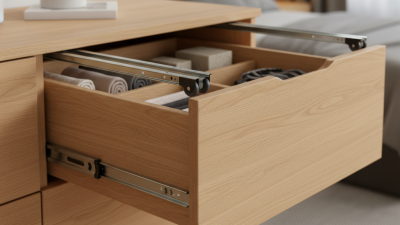
Choosing between side-mount and undermount soft-close slides starts with the drawer box, not the closing feature. Side-mount slides usually need about 1/2 inch of clearance on each side, but the product’s installation sheet is the final authority. Measure the opening at the front, middle, and back; older cabinets are rarely perfectly square. A small twist can make a drawer rub. Side-mount hardware is visible when the drawer opens, yet its clearance is relatively easy to inspect and adjust.
Undermount slides hide beneath the drawer, giving the cabinet a cleaner look, but they demand precise box dimensions. Check the required drawer width, bottom recess, rear notch, and front-locking-device space before cutting. A thick drawer bottom or a misplaced notch can prevent the slides from seating correctly. ANSI/BHMA A156.9 evaluates cabinet hardware using performance criteria that include durability and load testing; consult the applicable grade and test documentation when comparing specifications. That standard does not replace the slide maker’s clearance requirements. A practical mistake is measuring only one spot and assuming the cabinet is square. I’ve seen that assumption turn a neat installation into repeated trimming.
Side-Mount vs. Undermount: Drawer Width Allowance
Compare typical per-side space allowances before choosing slides. Side-mount slides commonly need 1/2 inch of clearance on each side. Undermount drawer-width deductions often total 5/8–1 inch, equivalent to about 5/16–1/2 inch per side.
These are general fit-check figures, not universal specifications. Confirm the required drawer dimensions and clearances in the slide manufacturer’s installation instructions before building the drawer.
Check Soft-Close Compatibility, Cycle-Life Ratings, and 32-mm System Fit
Soft-close slides must match the cabinet, not just the drawer’s weight. Confirm the mechanism works with your chosen slide type; some dampers are built in, while others need separate hardware. Check the closed position, drawer width, and clearance behind the face frame. A soft-close unit can feel smooth in a test fit, then bind when the drawer is loaded. Measure twice. I still recheck the rear clearance, because it is easy to miss.
Treat cycle-life figures as test results, not guaranteed years of service. ANSI/BHMA A156.9-2020 sets performance and endurance testing criteria for cabinet hardware. When a data sheet lists, for example, 50,000 cycles, compare the test load and method before comparing products. A lighter test load is not equivalent to a heavier one. The 32-mm system also needs careful checking: confirm the distance between mounting holes, drawer-side dimensions, and cabinet depth against the slide’s installation drawing. A nominal fit can still be off by a few millimeters. That small mismatch matters. A technical rating is useful, but the installation details deserve a second look.