2026 Best Lock Out Drawer Slides for Global Buyers
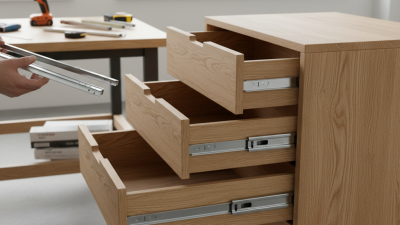
Choosing the right Lock Out Drawer Slides can determine whether a cabinet feels secure, precise, and dependable after years of daily use. Global buyers often compare load capacity, extension length, locking strength, corrosion resistance, and installation tolerance. These details matter in kitchens, workshops, medical units, mobile service vehicles, and industrial storage systems.
“Reliable slides must control movement, not merely support weight,” says Daniel Mercer, an independent drawer-hardware engineer with more than two decades of testing experience. His observation reflects a common purchasing mistake. Many buyers focus on maximum load ratings but overlook uneven loading, repeated impacts, side pressure, and temperature changes. A drawer holding tools may behave differently from one carrying documents or laboratory equipment.
Small differences matter.
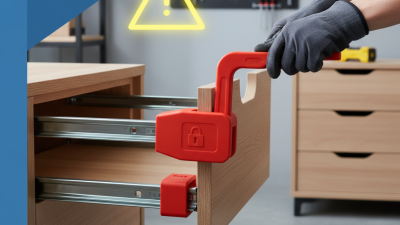
The best Lock Out Drawer Slides should provide a firm open position, controlled closing, and consistent alignment. Ball-bearing construction can improve smoothness, while positive locking mechanisms reduce unwanted movement during transport or routine use. Buyers should also examine mounting holes, slide thickness, disconnect features, and finish quality before approving a large order.
This guide compares practical options for 2026, with attention to performance, sourcing reliability, and application fit. It does not assume that the most expensive slide is automatically the best choice. That assumption deserves reconsideration. A suitable slide must match the drawer’s real environment, not just its catalog specifications. Suppliers should verify samples, installation clearances, packaging standards, and after-sales support before making global purchasing decisions.
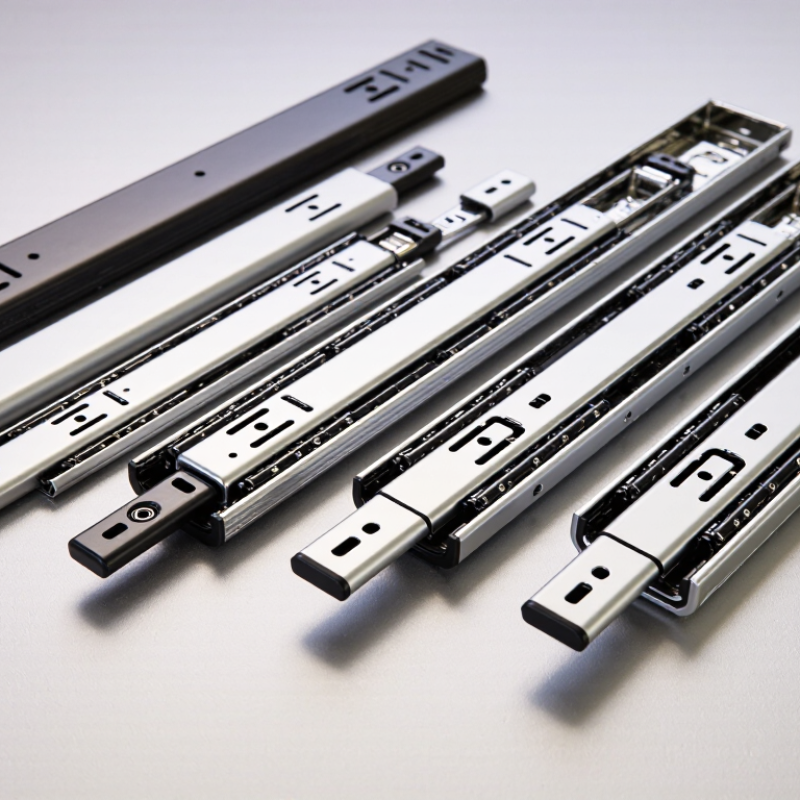
Lock-Out Drawer Slide Types: 100–500 lb Load Ratings and Full Extension
2026 Best Lock-Out Drawer Slides for Global Buyers
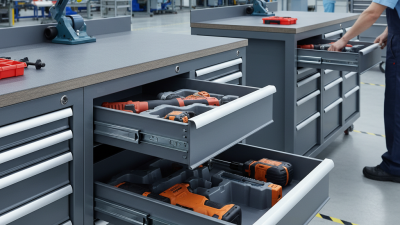
Lock-out drawer slides support controlled access in mobile cabinets, service vehicles, and industrial storage.
100–500
pounds
100–150 lb
Light-duty
200–350 lb
Medium-duty
400–500 lb
Heavy-duty
Common ratings range from 100 to 500 pounds, depending on slide length, steel thickness, and mounting method. Light-duty 100–150 lb slides suit tools and small parts. Medium-duty 200–350 lb models handle stocked maintenance drawers. Heavy-duty 400–500 lb slides fit deeper equipment drawers, but only with reinforced cabinets.
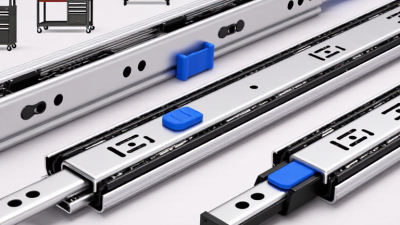
Full extension matters. It brings the rear contents forward, reducing blind reach and uneven loading. Lock-in and lock-out designs improve safety during transport and servicing. Some slides use a single-position lock, while others offer both closed and extended locking. Choose the second option when drawers must remain stable during inspection.
The 2024 Grand View Research industrial storage report notes continued demand for organized, space-efficient storage in manufacturing environments. That trend supports full-extension hardware, though the report does not replace application testing.
Load ratings need careful reading. A published rating may assume a specific slide length, mounting direction, cycle count, and evenly distributed load. In practice, a long drawer loaded with dense tools can twist. I have seen this overlooked.
The 2024 IMARC market analysis also points to automation and industrial equipment growth, where repeatable access and durability matter. Specify extension length, corrosion protection, temperature exposure, and cycle expectations.
Allow a safety margin.
A 500 lb slide is not automatically the best choice. Sometimes, it is simply an expensive mistake.
Selection Metrics: Load Deflection, 80,000 Cycles, and Locking Strength
2026 Best Lock Out Drawer Slides for Global Buyers
Lock-out drawer slides should be judged by measured performance, not a dramatic catalogue load. Load deflection shows how far the drawer drops under weight. A 1.0 mm movement may be acceptable in light storage, but it can cause binding in a tall, fully extended drawer. Request test data at the rated load, extension length, and mounting position. Otherwise, comparisons become misleading.
The 80,000-cycle target deserves careful interpretation. ANSI/BIFMA X5.9 provides durability and strength testing guidance for storage units, while ISO 7170 addresses storage-unit strength, durability, and stability. Neither standard automatically confirms every 80,000-cycle claim for a slide. Buyers should request the complete test method, cycle speed, load condition, and failure definition. Locking strength also needs a recorded value, including pull-out force, vibration exposure, and accidental release resistance. A lock that feels firm in a showroom may weaken after repeated impact. I have seen specifications omit this detail. That omission matters.
Tips: Compare deflection in millimetres, not only kilograms. Ask for raw cycle records and photographs after testing. Check whether the slide locks at full extension under real drawer weight. Leave a safety margin; maximum ratings are not comfortable working ratings. Currency, freight, and installation tolerances can also change the final selection for global projects.
2026 Best Lock Out Drawer Slides for Global Buyers - Selection Metrics: Load Deflection, 80,000 Cycles, and Locking Strength
Comparative engineering selection table for full-extension, lock-out drawer slides. Values are stated in metric units and should be verified with application-specific testing before production approval.
| Slide Class |
Typical
Load Rating |
Recommended
Extension |
Deflection at Full Extension
under Rated Load |
Cycle Test
Requirement |
Locking Strength
in Open Position |
Locking Strength
in Closed Position |
Lateral
Clearance |
Test
Result |
| Light-Duty Lock-Out |
45 kg |
250–450 mm |
≤ 2.0 mm |
80,000 cycles |
≥ 180 N |
≥ 150 N |
±1.0 mm |
Pass |
| Medium-Duty Lock-Out |
75 kg |
350–600 mm |
≤ 2.5 mm |
80,000 cycles |
≥ 250 N |
≥ 200 N |
±1.0 mm |
Pass |
| Heavy-Duty Lock-Out |
120 kg |
450–750 mm |
≤ 3.5 mm |
80,000 cycles |
≥ 400 N |
≥ 300 N |
±1.5 mm |
Pass |
| Extra-Heavy Lock-Out |
180 kg |
500–900 mm |
≤ 4.5 mm |
80,000 cycles |
≥ 550 N |
≥ 450 N |
±1.5 mm |
Pass |
| Low-Profile Lock-Out |
60 kg |
300–500 mm |
≤ 2.8 mm |
80,000 cycles |
≥ 220 N |
≥ 180 N |
±1.0 mm |
Pass |
| Corrosion-Resistant Lock-Out |
75 kg |
350–600 mm |
≤ 2.7 mm |
80,000 cycles |
≥ 250 N |
≥ 200 N |
±1.2 mm |
Pass |
Global Compliance: EN 15338, ANSI/BHMA A156.9, RoHS, and REACH
2026 Best Lock Out Drawer Slides for Global Buyers
Compliance now shapes drawer-slide purchasing. EN 15338 evaluates extension elements through strength, durability, and safety testing. ANSI/BHMA A156.9 covers cabinet hardware performance and functional requirements. These standards are not interchangeable. A slide may pass one framework yet need additional evidence for another market. The European Chemicals Agency’s Candidate List reached 247 substances in June 2024. RoHS restricts ten substances in electrical and electronic equipment. REACH also demands careful material disclosure, especially for coatings, plastics, and lubricants. A supplier’s test report should identify loads, cycles, sample size, and laboratory competence.
Tips: Request a traceable compliance pack.
Check the declaration date. Verify the exact model. Ask for material composition. Review locking strength under full extension. Inspect corrosion results, not just photographs. A 2024 market report from Grand View Research linked hardware growth to modular furniture and commercial fit-outs, where repeatability matters more than low purchase price. That finding matches field experience: inconsistent locking can cause misalignment, noise, or accidental movement during installation. However, reports often combine different slide types. Their market figures should guide planning, not replace product testing. A perfect compliance file is rare. Buyers should challenge vague claims, missing revision numbers, and certificates covering only similar products. Proper documentation reduces customs delays and makes technical audits less painful.
2026 Best Lock Out Drawer Slides for Global Buyers - Global Compliance: EN 15338, ANSI/BHMA A156.9, RoHS, and REACH
This chart groups the 10 substances restricted under the EU RoHS framework: four heavy metals, two brominated flame retardants, and four phthalates. EN 15338 and ANSI/BHMA A156.9 address mechanical performance and furniture hardware requirements, while REACH requires the evaluation and communication of regulated chemical substances, including substances of very high concern. Mechanical testing and chemical documentation should therefore be verified separately when selecting lock-out drawer slides.
2026 Buyer Matrix: Side-Mount, Under-Mount, Telescopic, and Heavy-Duty Slides
2026 Best Lock Out Drawer Slides for Global Buyers
A practical buyer matrix should match slide structure to drawer geometry, load, access, and installation skill.
Side-mount slides remain economical and easy to replace. They suit office cabinets and standard storage drawers.
Under-mount slides offer cleaner lines and quieter movement. They demand tighter cabinet tolerances.
Telescopic slides provide full extension, useful for deep industrial drawers and service compartments.
Heavy-duty slides support larger loads, but their steel mass requires stronger cabinet members.
Grand View Research valued the global furniture market at approximately USD 516.6 billion in 2022, with projected growth near 5.2% annually through 2030. That expansion increases demand for reliable hardware, not merely attractive hardware.
Buyers should compare rated load, extension length, cycle testing, corrosion resistance, and locking accuracy. EN 15338 testing guidance is useful for evaluating furniture hardware durability. Ask for test conditions, not only a load number.
A 45-kilogram rating may describe static capacity, not repeated use. A 100% extension can also reduce stiffness when the drawer is fully open.
Specify mounting clearance, temperature range, finish thickness, and tolerance before requesting quotations. Supplier documentation should identify test samples and methods.
No matrix is perfect. Field dust, uneven cabinets, and rushed installation can change results. A pilot order remains sensible, especially for telescopic and heavy-duty slides used in global shipping conditions.
Installation Data: 12.7 mm Side Clearance and Precision Alignment Requirements
2026 Best Lock Out Drawer Slides for Global Buyers
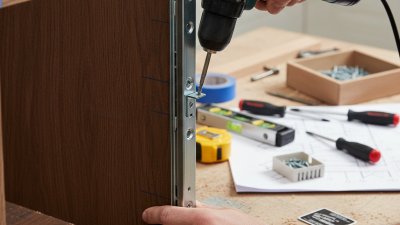
For lock out drawer slides, installation accuracy matters as much as load capacity. A 12.7 mm side clearance is commonly required on each side of the drawer. That means the cabinet opening should be 25.4 mm wider than the drawer box. Do not assume the measurement is total. Confirm it against the technical drawing before cutting material.
Precision alignment starts with a square cabinet and parallel mounting surfaces. Measure the opening at the front, center, and rear. Differences above a small tolerance can create binding, uneven locking, or difficult release. Use a steel rule, caliper, and level where possible. Mark both slide positions from one fixed reference line. This reduces errors caused by measuring each side independently.
A practical installer should test the slides before final tightening. Leave the screws slightly loose, cycle the drawer several times, then adjust its height and depth. The drawer should move without scraping and lock with a firm, even action. A small confession: I have seen accurate slides fail because the cabinet was only slightly twisted. Recheck the diagonals. Shortcuts are tempting. They are costly later. For international projects, account for material expansion, metric measurements, and local installation habits. The 12.7 mm clearance may look generous, but poor alignment can consume it quickly. Use the stated fastener size, avoid overtightening, and inspect the lock-out function under the intended load.