Top 10 Drawer Rails for Smooth and Durable Storage Solutions?
When it comes to organizing your space, drawer rails play a crucial role. They ensure that drawers slide smoothly in and out, making access convenient. The right drawer rails can enhance the functionality of your furniture. Robust and durable, quality rails contribute to a long-lasting storage solution.
However, not all drawer rails are created equal. Some may look good but fail under pressure. Choosing the right material is essential. Metal and heavy-duty plastic options offer longevity. Investing in high-quality drawer rails can save you from frequent replacements. On the other hand, budget-friendly choices can bring compromises in performance.
Reflecting on your current setup might reveal areas for improvement. Are your drawers often stuck? If so, it’s time to consider an upgrade. This article highlights the top 10 drawer rails available today. Each option is designed to provide smooth and reliable storage. Your organizational efforts deserve the best foundation.
Understanding Different Types of Drawer Rails for Storage Solutions
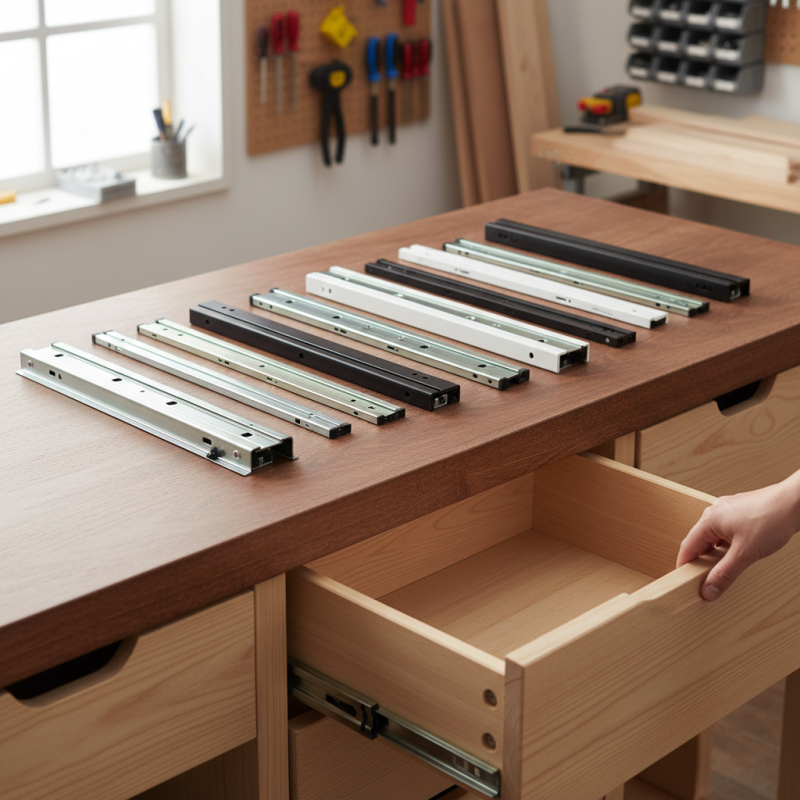
Drawer rails are essential components for any functional storage system. They come in various types, each suited for different needs. According to industry research, around 70% of consumers prioritize smooth functionality and durability when selecting drawer rails. This suggests that the type of rail can significantly affect the usability of drawers in both residential and commercial spaces.
Ball-bearing rails are common. They offer smooth operation and can handle heavy loads. However, their installation can be tricky. Many users find themselves frustrated during setup. On the other hand, side-mount rails are easier to install but may not support as much weight. Reports indicate that nearly 40% of users experience issues with alignment, leading to potential drawer misalignment.
Undermount rails are another option. They provide a clean look and are often quieter. However, they require precise measurements during installation. Data shows that 25% of DIY projects fail due to incorrect measurements, emphasizing the importance of precision when using undermount solutions. Proper understanding of each type can lead to enhanced storage experiences, but users must also consider their specific needs and installation capabilities.
Top 10 Drawer Rails for Smooth and Durable Storage Solutions
| Rail Type |
Material |
Load Capacity |
Length Range |
Key Features |
| Full Extension Rails |
Steel |
100 lbs |
12-30 inches |
Easy installation, smooth gliding |
| Side Mount Rails |
Aluminum |
70 lbs |
15-24 inches |
Space-saving design, perfect for narrow drawers |
| Under Mount Rails |
Steel |
80 lbs |
18-36 inches |
Invisible hardware, clean aesthetic |
| Ball Bearing Slides |
Chrome-Plated Steel |
150 lbs |
14-32 inches |
Quiet operation, long-lasting |
| Soft Close Rails |
Steel |
75 lbs |
12-30 inches |
Soft close mechanism, noise reduction |
| Heavy-Duty Rails |
Stainless Steel |
200 lbs |
24-48 inches |
Built for high loads, corrosion-resistant |
| Euro Rails |
Plastic/Metal |
50 lbs |
15-30 inches |
Compact, ideal for European cabinets |
| Tilt-Out Rails |
Metal |
60 lbs |
12-24 inches |
Tilt-out functionality, space-efficient |
| Lateral Rails |
Steel |
90 lbs |
16-34 inches |
Ideal for lateral files, easy access |
| Compact Rails |
Aluminum |
40 lbs |
10-20 inches |
Space-saving, lightweight design |
Key Features to Look for in Durable Drawer Rails
When choosing drawer rails, material is key. Look for steel or reinforced plastic options. They often last longer than flimsy alternatives. Steel rails can support heavy loads. Reinforced plastic offers a lighter option, which is great for smaller drawers. This choice impacts how smoothly drawers glide. You want easy access, not constant jamming.
Consider the rail design as well. Side-mounted rails are common. They provide stability but can require more space. Bottom-mounted rails take up less room but may not support heavy drawers as well. Each design has pros and cons. Reflect on your needs before deciding.
Don’t overlook weight capacity. It’s easy to underestimate your drawer contents. A rail that seems adequate may falter under heavy use. Measure your items, and choose a rail that exceeds your needs. It’s a small step for future-proofing your storage solutions. After all, a durable rail can save you money and hassle in the long run.
Top Materials Used in Manufacturing Drawer Rails
When choosing drawer rails, the material plays a crucial role in performance and durability.
Metal is one of the top materials. It offers great strength and longevity.
Many high-quality rails use steel or aluminum. They bear heavy loads without bending or warping.
Metal also resists rust, making it suitable for humid environments.
However, some users find metal rails noisy. This can be an area for improvement.
Plastic is another popular material for drawer rails. It is lightweight and often less expensive than metal.
These rails can be designed for specific applications. They may offer quiet operation, but their strength can be a concern.
Over time, plastic may wear down. Users might notice more sticking or failure. This is a common issue.
Wood is also a choice for drawer rails. Solid wood can add a vintage touch and charm.
It is also sturdy and can handle significant weight. However, wood is prone to expanding and contracting with moisture changes.
This can lead to alignment issues down the line. Regular maintenance is required to keep them in good shape.
Each material has pros and cons that must be evaluated based on user needs and preferences.
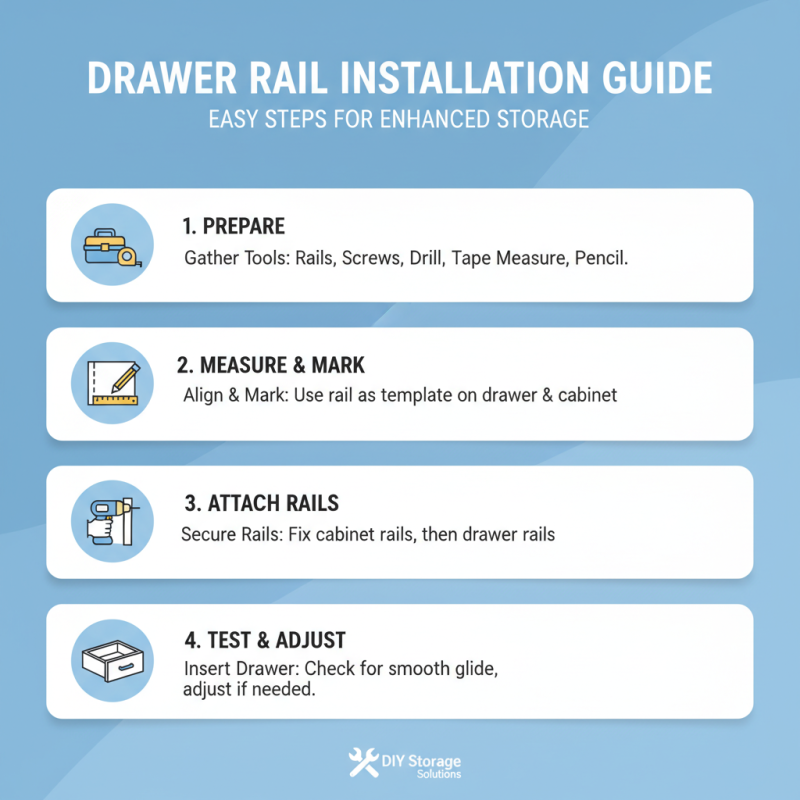
How to Install Drawer Rails: A Step-by-Step Guide
Installing drawer rails can greatly improve storage functionality. Follow this simple step-by-step guide for a smoother experience.
Start by gathering your materials. You will need a tape measure, screwdrivers, and the drawer rails. Measure the drawer's width and depth carefully. Make sure the rails fit perfectly. It's crucial.
Next, mark the rail positions inside the cabinet. Use a level to ensure accuracy. This step can be tricky; don't rush. If you misplace a mark, it can lead to uneven drawers. Secure the rails with screws. Here’s a tip: pre-drill holes to avoid splitting the wood.
Install the drawer onto the rails. Test its movement. If it feels sticky, check the alignment. Sometimes you may need to adjust. After several tests, ensure it glides smoothly.
For better durability, regularly check and tighten screws. Over time, movement can loosen them. Maintaining the rails will save you from future issues. Small details do matter in the long run.
Maintenance Tips for Extending the Life of Your Drawer Rails
Proper maintenance is crucial for extending the life of your drawer rails. Regular cleaning can prevent dust buildup. Dust and debris often lead to jams and wear. Use a soft cloth or a small vacuum attachment to keep these areas clear.
Another important tip is to check the screws and fittings regularly. Loose screws can cause instability. Tightening them can improve smooth operation. Don’t ignore any signs of misalignment. Adjusting the rails may be necessary to ensure every drawer opens and closes perfectly.
Lubrication is also vital for smooth operation. A small amount of lubricant keeps the rails functioning correctly. However, be cautious; too much can attract dirt. If the operation feels rough, it's a sign you should apply some lubricant. Always wipe away excess. Taking these simple steps can significantly increase the lifespan of your drawer rails.