What is Heavy Duty Telescopic Rail and How Does It Work?
In the world of modern manufacturing, the "Heavy Duty Telescopic Rail" stands out. This innovative component enhances equipment mobility and stability in various applications. Renowned expert John Harrison states, "Heavy Duty Telescopic Rails are pivotal for lifting and sliding systems, ensuring durability and efficiency."
Manufacturers are increasingly adopting this technology. It allows for smooth operation in warehouses and industrial settings. However, several challenges arise. Installation can be complex, and users may underestimate maintenance needs.
As the industry evolves, the demand for Heavy Duty Telescopic Rails surges. Buyers value efficiency, but they must balance it with reliable service. Enhanced features come with a learning curve, requiring careful consideration. The integration of AI in showcasing this technology at events, like the 2026 Canton Fair, further illustrates its growth.
Understanding Heavy Duty Telescopic Rails: An Overview
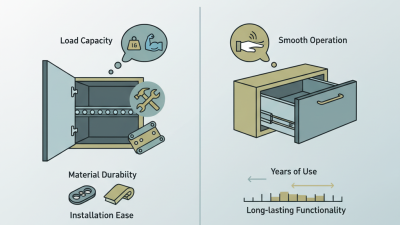
Heavy duty telescopic rails are designed for strength and reliability. They are often made of robust materials which support substantial weights. These rails allow for smooth extension and retraction, making them useful in various industries. They are commonly used in truck beds, storage systems, and machinery.
The mechanism behind heavy duty telescopic rails is simple yet effective. When pushed or pulled, the rails slide in and out, thanks to their multi-section design. This design provides stability during movement. Each section interlocks, enabling a secure connection that can hold significant loads. Users must ensure proper maintenance to prevent wear and potential failures over time.
Using these rails requires understanding their limits. Overloading can lead to malfunction. Observing manufacturer guidelines is essential. Adjustments may be necessary as conditions change. Regular inspection for signs of wear can enhance their lifespan. Heavy duty telescopic rails offer great flexibility but require careful handling to function optimally.
What is Heavy Duty Telescopic Rail and How Does It Work? - Understanding Heavy Duty Telescopic Rails: An Overview
| Feature |
Description |
Benefits |
| Load Capacity |
Typically supports up to 1000 kg or more, depending on the design. |
Enables safe handling of heavy materials in various applications. |
| Material |
Usually constructed from high-strength steel or aluminum alloys. |
Durable and resistant to corrosion, enhancing longevity. |
| Design |
Features multiple extensions to allow smooth sliding and operation. |
Improves accessibility to storage areas and facilitates efficient workflow. |
| Applications |
Used in warehouses, factories, and automotive industries. |
Versatile solution for organizing and accessing heavy items. |
| Maintenance |
Requires regular inspection and lubrication to ensure smooth operation. |
Helps in prolonging the service life and reliability of the rails. |
Components of Heavy Duty Telescopic Rails and Their Functions
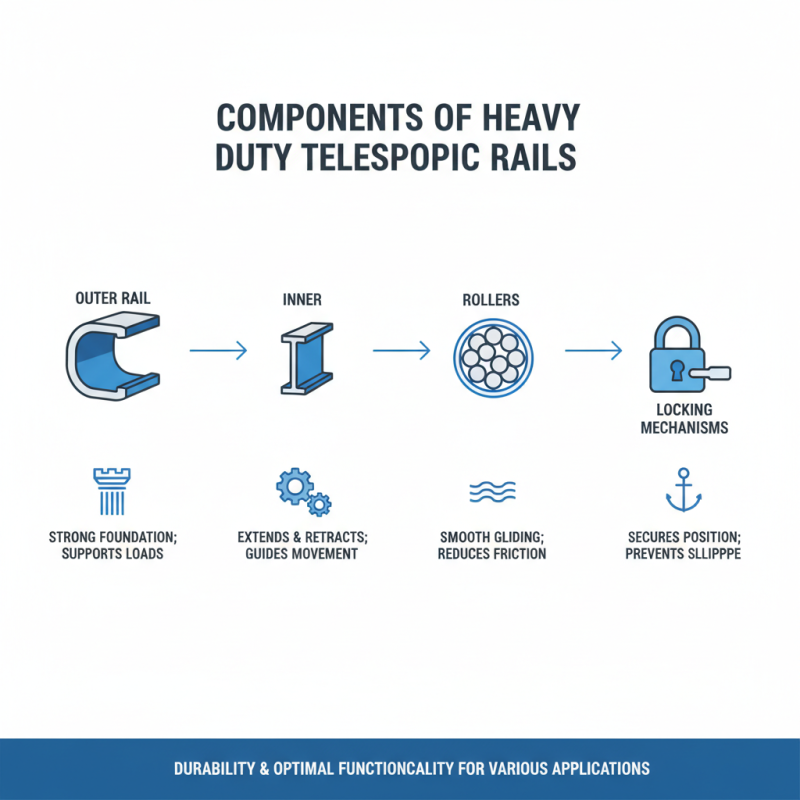
Heavy duty telescopic rails are designed for optimal functionality and durability in various applications. The primary components include the outer rail, inner rail, rollers, and locking mechanisms. Each part plays a crucial role in ensuring smooth movement and stability. The outer rail provides a strong foundation that supports the entire system. It's typically made from robust materials to withstand heavy loads over time.
The inner rail moves along the outer rail, allowing for smooth extension and retraction. Rollers are essential for reducing friction, enabling the inner rail to glide effortlessly. They must be carefully calibrated; even slight misalignments can lead to operational issues. Lastly, the locking mechanism secures the rail in place when extended. This component is critical for safety, especially when heavy objects are being moved. A faulty lock could pose risks.
Constructing heavy duty telescopic rails requires precision. Even minor mistakes in measurements can affect performance. Designers must consider weight limits and intended usage. Overestimating capabilities can lead to failure under load, resulting in potential damage or injury. Continuous evaluation and testing are vital to maintain functionality and safety standards.
Mechanics Behind the Operation of Telescopic Rails
Heavy-duty telescopic rails are impressive mechanisms widely used in various applications. Their primary function is to provide support and facilitate smooth motion. Unlike traditional sliding systems, these rails expand and contract, allowing for versatile space management. The design incorporates multiple sections that can glide into one another.
The mechanics behind telescopic rails stem from simple yet effective engineering principles. Each rail section is fitted with rollers or ball bearings. This reduces friction, enabling a seamless glide. The load capacity is crucial; these rails can support significant weight while maintaining functionality. Proper alignment is essential. Misalignments may cause jamming or uneven wear.
Moreover, maintenance can be tricky. Regular checks are needed to ensure efficiency. Dust, debris, or lack of lubrication can hinder performance. Sometimes, users might overlook these aspects, leading to wear and tear. In such cases, the system might not function as intended. Users should prioritize regular evaluations.
Applications of Heavy Duty Telescopic Rails in Various Industries
Heavy duty telescopic rails are essential in various industries. Their design allows for smooth extension and retraction. This feature is crucial in spaces where access is limited. In warehouses, for instance, these rails enable easier handling of heavy loads. They help improve workflow efficiency significantly.
In automotive assembly lines, telescopic rails are frequently used. They allow quick access to tools and components. Workers can retrieve items without moving away from their tasks. This setup reduces time and increases productivity. However, improper installation can lead to inefficiencies. Regular maintenance is needed to ensure optimal performance.
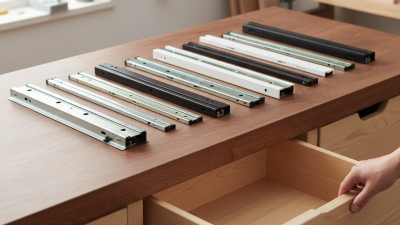
Heavy duty telescopic rails also find applications in furniture design. For instance, they can enhance storage solutions in kitchens and offices. Drawers can extend fully, making access more convenient. Yet, the design must consider weight limits. Exceeding these can cause functionality issues in the long run. Designers often need to rethink weight distribution in such cases.
Maintenance Tips for Ensuring Longevity of Telescopic Rails
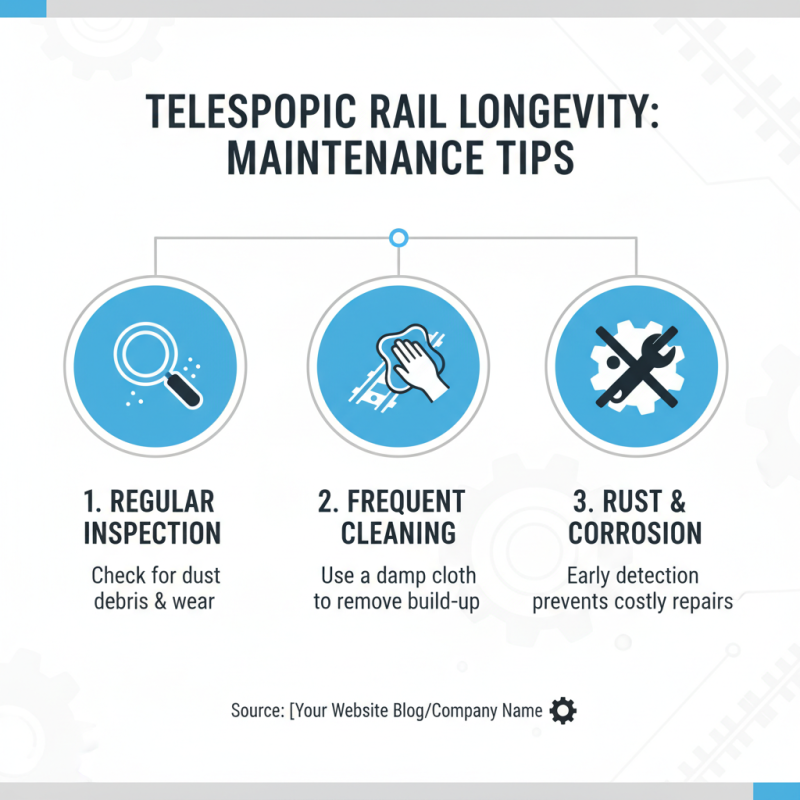
To maintain heavy duty telescopic rails, regular inspection is essential. Dust and debris can accumulate in the tracks. This can lead to increased friction and wear. To avoid this, clean the rails frequently with a damp cloth. Make sure to check for signs of rust or corrosion as well. Early detection can save you from costly repairs later.
Lubrication is critical for smooth operation. Use a suitable lubricant to reduce friction between moving parts. It prevents wear and tear, allowing the rail to function efficiently. However, don’t over-lubricate. Excess lubricant can attract dirt, which may cause issues. Apply just enough to keep the motion smooth.
Finally, ensure that the telescopic rails are correctly aligned. Misalignment can lead to uneven wear and tear. If you notice irregular movements or increased resistance, it may indicate an alignment issue. Address this promptly to extend the lifespan of your rails. Keeping a close watch on these areas will help you maintain functionality and safety.