China Top 10 Lock Out Drawer Slides Suppliers
Choosing among China’s Top 10 Lock Out Drawer Slides Suppliers requires more than comparing catalog prices. A dependable supplier must combine controlled movement, secure locking, accurate dimensions, and repeatable production. In real installations, a drawer may carry metal tools, pull out hundreds of times daily, and face dust, moisture, or uneven cabinet surfaces. Small weaknesses become obvious quickly.
Julius Blum, founder of Blum, expressed a useful design principle: “Furniture should make everyday life easier.” That idea applies directly to Lock Out Drawer Slides. A well-designed slide should extend smoothly, lock firmly, and release without excessive force. It should also protect the user from sudden movement. This guide examines ten Chinese suppliers through practical purchasing factors, including load ratings, extension length, locking mechanisms, steel quality, surface treatment, tooling capability, and quality-control records.
Supplier claims still require careful checking. A stated 100-kilogram capacity may depend on drawer width, mounting position, and testing conditions. Ask for cycle-test evidence. Request samples. Measure the actual rail thickness.
Experience also reveals an uncomfortable truth: the cheapest quotation is rarely the cheapest long-term choice. Poor alignment can cause noise, binding, and premature replacement. Some suppliers offer impressive samples but inconsistent mass production. That risk deserves attention.
The suppliers featured here are assessed for manufacturing experience, customization support, communication, export reliability, and technical transparency. No ranking can fit every project. A heavy-duty industrial drawer needs different priorities from a compact service cabinet. Therefore, buyers should treat this list as a research starting point, not a final purchasing decision.
China’s Top 10 Lock-Out Drawer Slide Suppliers: Scope and Selection Criteria
China’s lock-out drawer slide market includes manufacturers, contract factories, and specialized hardware suppliers. This scope matters because their capabilities can differ sharply. Some focus on automotive storage, while others serve cabinets, tool cases, or industrial equipment. A serious review should examine locking strength, extension length, load rating, installation space, and operating temperature.
Supplier selection should begin with practical evidence, not catalog images. Ask for material specifications, dimensional drawings, test records, and production samples. Check whether the supplier controls stamping, heat treatment, coating, and final assembly. These processes affect smooth movement and long-term locking performance. Request cycle testing under realistic loads, such as a fully loaded drawer opening repeatedly in a dusty workshop. Clear quality procedures and traceable inspections also support reliability. Delivery history, packaging methods, communication speed, and after-sales handling deserve attention. A polished catalog can still hide weak testing. No shortlist is perfect.
Tips: Compare at least three samples using the same drawer, load, and mounting method. Measure side play, noise, release force, and locking stability. Check both open and closed positions. Ask for a small pilot order before committing to volume. Written specifications reduce misunderstandings, although they cannot replace hands-on inspection. Be cautious with impressive claims that lack test conditions. A supplier may meet one project’s needs but fail another’s space or load requirements. Reflect after testing, and revise the criteria if real workshop results disagree with the original assumptions.
China’s Top 10 Lock-Out Drawer Slide Suppliers: Scope and Selection Criteria
The chart presents a supplier-neutral procurement framework for comparing lock-out drawer slide manufacturers. The weighting reflects practical engineering and purchasing priorities, including locking reliability, load capacity, corrosion resistance, extension performance, cycle life, dimensional fit, operating temperature, documentation, and after-sales support. It does not represent individual company or brand performance.
Load Ratings from 45 kg to 227 kg and Extension Types Compared
China Top 10 Lock Out Drawer Slides Suppliers
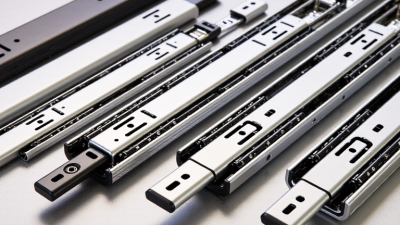
Lock-out drawer slides commonly range from 45 kg to 227 kg per pair. However, the rating may describe static capacity, not repeated working load. Buyers should verify the test method, drawer width, cycle count, and mounting position. EN 15338 evaluates strength and durability for furniture extension elements, while ANSI/BIFMA X5.9-2019 provides relevant storage-unit testing guidance. These standards improve comparison, but supplier figures still need careful checking.
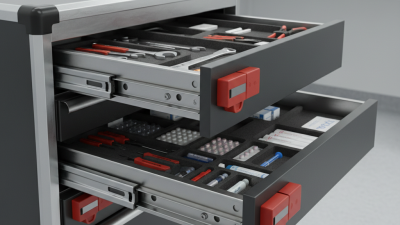
Partial-extension slides leave part of the drawer inside the cabinet. They suit lighter storage and reduce cost. Full-extension slides expose nearly the entire drawer, helping technicians reach rear components. Over-extension slides travel beyond the cabinet face, which is useful for deep tool drawers. Heavy-duty models between 100 kg and 227 kg often require thicker steel, reinforced locking members, and precise side clearance. Small installation errors matter.
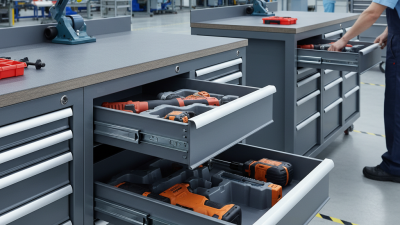
A 45 kg slide may fit office storage, while a 100 kg model suits workshop drawers. The 227 kg class demands stronger cabinet construction, not just stronger slides. Industry testing guidance often separates static loading from durability cycling. That distinction is easy to miss. Published supplier catalogues should therefore be compared with independent inspection records, dimensional drawings, and cycle-test results. Freight packaging also deserves attention; bent rails can destroy performance before installation. The selection process is not perfectly simple. Each supplier should disclose whether capacity applies per pair and under what drawer dimensions.
Cycle-Life Testing: Comparing 80,000-Cycle and 100,000-Cycle Designs
China Top 10 Lock Out Drawer Slides Suppliers
Cycle-life testing reveals more than a printed durability number. In practical sourcing work, an 80,000-cycle slide may perform well under a controlled 35-kilogram load. A 100,000-cycle design may offer greater reserve, but only when tested under comparable conditions. Test details matter. Engineers should record load weight, extension length, cycle speed, temperature, and locking frequency. A slide tested without repeated lock engagement does not represent daily cabinet use.
A reliable comparison uses several production samples, not one carefully selected unit. Inspectors should check noise, rail play, handle force, and lock release after every test stage. Small changes can become obvious after 60,000 cycles. Dust exposure and uneven installation also deserve attention. Real drawers rarely remain perfectly aligned. They face side pressure, overloading, and hurried closing. That is where supplier experience becomes visible.
Our early assumption was simple: more cycles meant a better slide. It was incomplete. Some 100,000-cycle designs showed stronger endurance but required tighter installation tolerances. An 80,000-cycle model sometimes delivered smoother movement and easier maintenance. This difference should not be ignored. Buyers comparing China’s leading suppliers should request complete laboratory records, failure definitions, sample quantities, and corrective-action reports. A credible supplier explains what failed, not only what passed. Performance claims need context. Testing without field feedback remains imperfect.