What Are the Best Soft Close Drawer Glides?
Choosing the right drawer hardware affects more than noise. It influences daily comfort, cabinet longevity, safety, and installation quality. This guide examines what makes Drawer Glides Soft Close reliable in real kitchens, bathrooms, workshops, and commercial interiors.
Cabinetmaker and hardware educator Gary Striegler has said, “Good hardware should make the cabinet feel better every time it is used.” That principle matters here. A soft-close glide should catch a moving drawer smoothly, slow it without a harsh stop, and remain stable under repeated use. The best models usually offer full extension, consistent closing resistance, accurate adjustment, and a clearly stated load capacity. However, specifications can mislead. A high weight rating means little if the drawer box is poorly built or the glide is installed out of alignment.
Small details matter. Check the drawer width with a steel tape. Confirm the required side clearance. Test the glide with an empty drawer, then with realistic weight, such as cookware or tools. Listen for scraping. Watch whether the front panel shifts during closing. These simple checks reveal problems that product photos cannot show.
There is no perfect glide for every project. Undermount systems create a cleaner appearance, while side-mount options often simplify retrofits. Some premium mechanisms feel exceptionally smooth but demand tighter installation tolerances. Others cost less and forgive minor mistakes. The right choice balances performance, cabinet design, budget, and repairability. This comparison helps separate impressive claims from dependable everyday function.
Understanding Soft Close Drawer Glides and How They Work
Understanding Soft Close Drawer Glides and How They Work
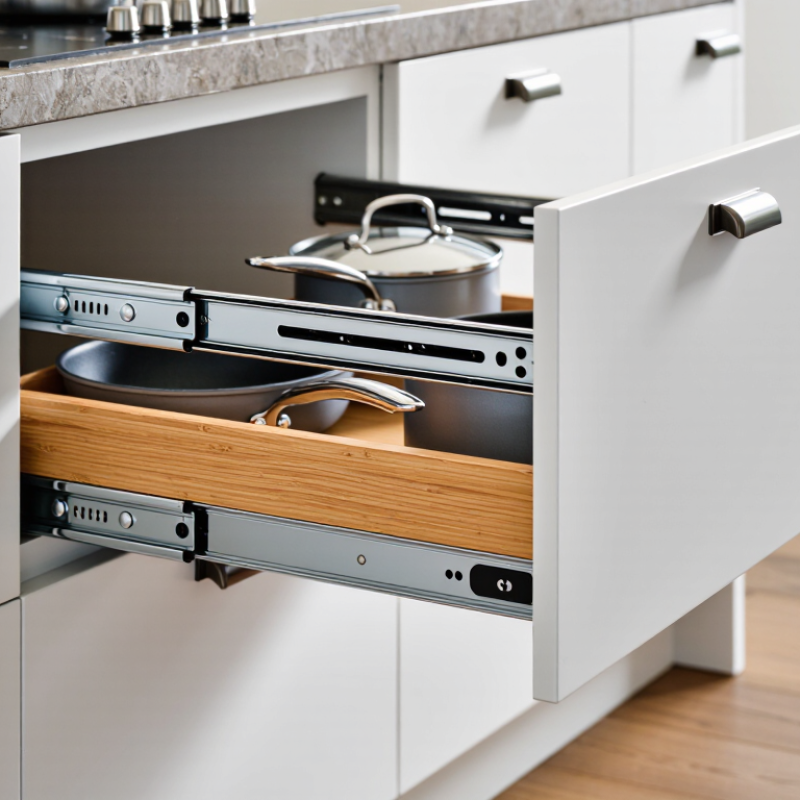
Soft close drawer glides use a spring and hydraulic damper to control closing speed. As the drawer approaches the cabinet, a trigger engages the damper. The mechanism absorbs momentum, then pulls the drawer gently into position. This prevents slamming, reduces vibration, and protects stored items such as glassware or cutlery.
A suitable glide should match the drawer’s weight, width, and construction. Full-extension models provide access to the rear, while undermount designs create a cleaner appearance. Side-mount glides are often easier to install and inspect. The 2024 National Kitchen & Bath Association Kitchen Trends Report recorded deep drawers in 64% of designer-specified kitchens. I would not treat that figure as universal, but it shows why durable drawer hardware matters. Industry testing commonly evaluates load capacity and opening cycles, yet real kitchens add dust, uneven loading, and hurried use. These details can expose weak installation.
Tips: Measure the cabinet opening carefully. Check the glide’s rated load before choosing it. Keep both sides perfectly parallel. A drawer that feels slightly tight may need adjustment, not force. Clean dust from the track with a dry cloth. Avoid excessive lubricant unless the manufacturer permits it. In my experience, soft-close performance often fails because the cabinet is out of square, not because the damper is defective. Small alignment errors matter.
How to Choose the Best Glide for Your Drawer Project
What Are the Best Soft Close Drawer Glides?
How to Choose the Best Glide for Your Drawer Project
Choosing the best soft close drawer glide starts with the drawer’s weight, width, and construction. A shallow utensil drawer needs less capacity than a deep drawer holding cookware. The NKBA 2024 Kitchen Trends Report identifies storage and accessibility as continuing design priorities. That supports selecting hardware for daily use, not appearance alone. For reliability, check the tested load rating under ANSI/BHMA A156.9 requirements. Common ratings include 75, 100, and 150 pounds. Measure the clear side space carefully. Many concealed glides need approximately 1/2 inch per side, but installation requirements vary.
I prefer full-extension glides for kitchen drawers. They expose the rear contents and reduce awkward reaching. Soft-close action should feel controlled, not abruptly slow. Check whether the rating includes the drawer box and its contents. It often does not. That detail can cause failures. I have also seen installers choose oversized capacity for every drawer. It works, but it can waste money and make adjustment less forgiving. A correctly sized glide usually performs better.
Tips: Match the glide length to the cabinet depth. Confirm overlay or inset compatibility. Test one drawer before ordering a full set. Use a straightedge during installation. Tiny alignment errors matter. Listen for scraping. That sound deserves attention.
What Are the Best Soft Close Drawer Glides?
Use these practical evaluation weights when choosing a soft-close drawer glide. Fit and clearance should be confirmed first, followed by load capacity, extension, adjustability, and installation effort.
The percentages are a planning framework rather than brand test results. Always verify the glide’s required side clearance, length, load rating, extension type, and mounting instructions against your drawer dimensions.
Installation Requirements and Long-Term Maintenance Considerations
Soft-close drawer glides work best when installation is precise, not rushed.
Measure the drawer box, cabinet opening, and required side clearance before drilling. Most side-mounted systems need matching space on both sides. Undermount systems demand accurate bottom and rear measurements. Check that the cabinet is square, because a slight twist can cause uneven closing.
Use a level, a sharp drill bit, and screws suited to the cabinet material. Keep both glide members parallel and at the same height. A drawer should move smoothly before the soft-close mechanism engages. Do not force it during testing. I once corrected a drawer that seemed defective, but the real problem was a 2-millimeter alignment error. That small gap mattered. Confirm the load rating, especially for drawers holding cookware, tools, or dense documents.
Tips:
Wipe dust from the tracks with a dry, lint-free cloth every few months. Inspect screws after repeated use, particularly in frequently opened drawers. Tighten loose fasteners gently; overtightening can damage particleboard. Avoid household oil unless the installation instructions specifically allow it, because oil can collect grit. Check for bent members, unusual resistance, or delayed closing. These signs often indicate misalignment rather than normal wear. Remove excess weight before troubleshooting. Maintenance is simple, but it is easy to overlook.