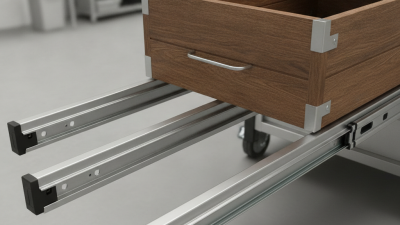
Choosing the right Heavy Duty Shelf Slides can determine whether a storage system feels dependable or frustrating. In 2026, global buyers face more options, changing supply conditions, and wider performance claims. A strong product should support its rated load without excessive movement, binding, or premature wear.
This guide examines heavy duty shelf slides through practical buying criteria. These include load capacity, extension length, steel thickness, bearing quality, locking mechanisms, corrosion resistance, and mounting accuracy. It also considers packaging, replacement parts, technical drawings, and supplier communication. These details matter when products travel across regions and must fit different cabinet designs. A slide may appear robust in a catalogue, yet poor alignment can reduce its real performance. Small installation errors matter.
Experience from workshop and industrial storage projects shows that published ratings require careful interpretation. Static capacity is not the same as safe working performance during repeated use. Buyers should request test methods, tolerance information, and clear installation instructions. Independent quality records can also strengthen supplier credibility. However, no single specification proves long-term reliability. Conditions vary.
Not every buyer needs the largest model. Oversizing can increase cost, weight, and installation difficulty. A better decision matches the slide with the shelf depth, load pattern, operating frequency, and environment. This overview compares leading options with a balanced perspective, including practical limitations and questions that remain unanswered. The goal is not to promote one supplier, but to help purchasing teams make informed, verifiable choices. That is the safer approach.
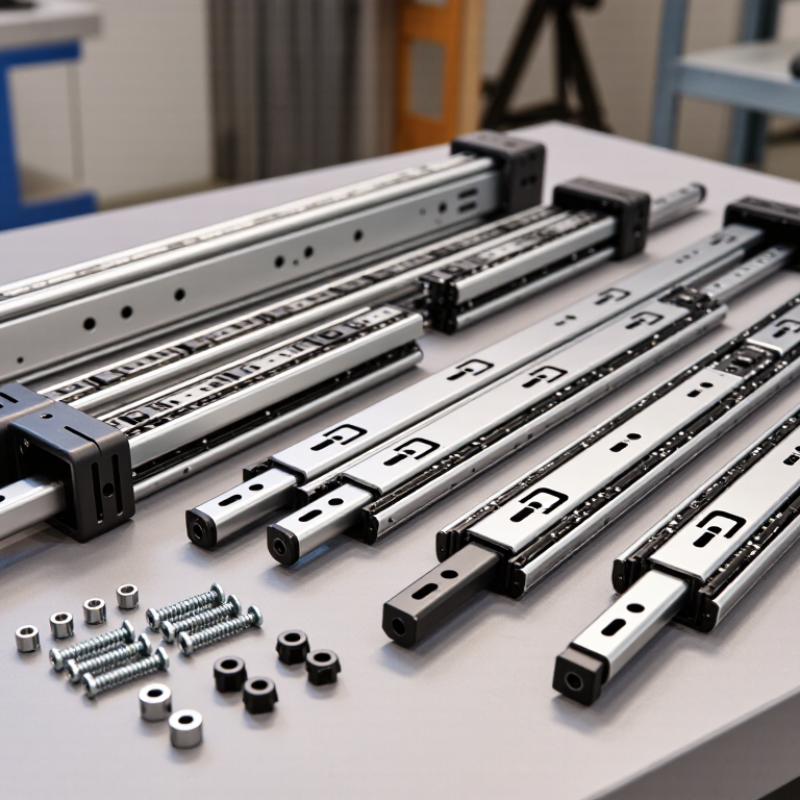
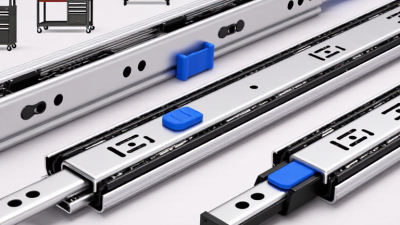
Heavy duty shelf slides are telescoping metal runners designed to support wide, heavy shelves during repeated movement. They allow a shelf to travel outward, giving users clearer access to stored equipment, tools, or boxed goods. They are not simple rails. Most designs contain nested steel members connected by ball bearings or rollers. These internal parts reduce friction while keeping the shelf aligned under load. In practical cabinet work, a smooth slide often feels stable at first, but performance can change when the shelf is fully extended.
When the shelf opens, each slide member moves along the next section in sequence. The bearing cage distributes pressure across many contact points, while locking positions can hold the shelf open or closed. Some models include a disconnect feature for easier installation. Others use a fixed structure because frequent removal may weaken alignment over time. Load ratings require careful reading. A stated capacity may apply only when the weight is evenly distributed and the slides are mounted correctly.
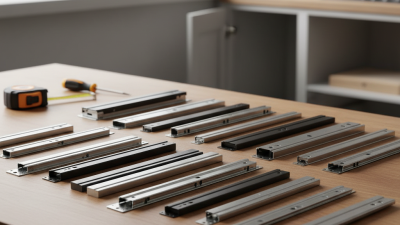
Measurement is critical. Installers should check cabinet depth, shelf width, side clearance, and mounting-hole alignment before ordering. A shelf carrying a dense machine part can create more stress at full extension than the same weight placed near the cabinet wall. That detail is easy to overlook. I would also avoid treating a higher capacity as automatic safety; weak panels, loose screws, or uneven flooring can still cause movement. A small test load should come before full operation.
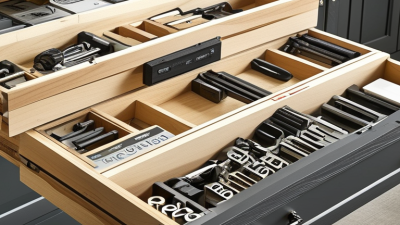
Heavy duty shelf slides should match the real load, not an optimistic estimate. Check the rated capacity at full extension and under repeated movement. A 100-kilogram rating may require even weight distribution across the shelf. Uneven tools can create twisting forces. Measure twice. Small errors matter.
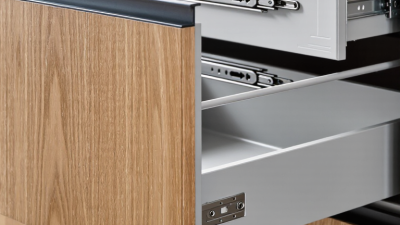
Extension length affects access and cabinet depth. Full-extension slides expose the rear of a shelf, while partial extension saves space. Confirm the closed length, open length, mounting clearance, and hole pattern before ordering. Side-mounted models often need precise gaps on both sides. Even a two-millimeter error can cause binding.
Material and surface protection deserve practical attention. Steel construction supports heavy loads, while zinc-coated or treated surfaces resist moisture during storage and transport. Check the operating temperature, corrosion test results, and fastener compatibility. Locking features can prevent unwanted movement in mobile equipment. Soft-close systems may improve handling, but they can reduce usable capacity. Verify cycle-life data through independent or supplier testing records. In my installation experience, supplier drawings are useful, yet physical samples reveal problems earlier. Packaging also matters because bent rails rarely recover their accuracy. A small overlooked detail can become an expensive installation delay.
Heavy Duty Shelf Slides for Global Applications
Heavy duty shelf slides support wide trays, tool shelves, storage drawers, and pull-out work surfaces. Their design affects load capacity, access, noise, and service life.
Ball-bearing slides are common for smooth, full-extension movement. They suit metal cabinets, utility vehicles, and industrial storage units. Roller slides handle larger shelves and moderate shock, especially in workshop environments. Linear guide slides provide accurate movement for heavy equipment, but they often require better alignment. Locking slides help prevent unwanted movement during transport or maintenance. Two-way slides allow access from both sides, which can improve workflow in shared workstations.
Tips: Check the dynamic load rating, not only the static rating. Measure the closed length, extension, side clearance, and mounting hole pattern. A 1,000-millimeter shelf needs stronger support than a compact drawer. Use paired slides with balanced loading. Keep heavy items near the center.
Global buyers should also consider temperature, dust, humidity, and installation habits. Stainless or coated materials can help in damp areas. Sealed bearings may perform better where dust is unavoidable. Yet no slide is maintenance-free. Even a strong model can fail when the shelf is overloaded or mounted unevenly. This is where product data sometimes creates false confidence. Test a sample under real weight, repeated cycles, and actual cabinet tolerances before placing a large order.
Main Types of Heavy Duty Shelf Slides for Global Applications
The chart compares representative rated load capacities for commonly used heavy duty shelf slide types. Load ratings are shown per pair under specified installation conditions; actual performance depends on slide length, extension, mounting orientation, cycle frequency, and load distribution. These reference values are suitable for preliminary global product selection and should be verified against the final technical datasheet.
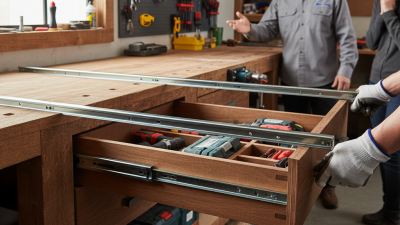
Heavy-duty shelf slides need careful installation before any load test begins. Measure the cabinet opening, shelf width, and slide spacing with a steel ruler. Even a two-millimeter error can cause binding during extension. Keep both slides level and parallel. Use the recommended screw size and anchor each mounting hole firmly. Do not rely on one oversized fastener.
Check the load rating for the complete slide pair, not one slide alone. Distribute the test weight across the shelf surface. Place heavier objects near the center, then gradually move them toward the front edge. Record deflection, movement, noise, and stopping distance. Test at closed, half-open, and fully extended positions. A practical test often reveals problems that measurements miss.
Use calibrated weights when possible, and document every result with photos and dates. Repeat the extension cycle several times under working load. Stop immediately if the shelf tilts, the hardware loosens, or the slide feels rough. Safety margins should follow the supplier’s technical data and applicable local requirements. Ratings may differ between static and dynamic loads. That detail is easy to overlook. Field conditions are rarely perfect, and our first test may not represent long-term use. Review the results honestly, then adjust alignment or hardware before approving production.
For 2026, global buyers should judge heavy-duty shelf slides beyond advertised load capacity. A 100-kilogram rating means little without extension length, mounting position, and cycle-test conditions. Ask suppliers for tested load data at full extension, not static showroom figures. ANSI/BIFMA X5.9 offers useful reference points for storage-unit performance, although it does not cover every slide design.
Supply planning also needs evidence. UNCTAD’s Review of Maritime Transport 2024 states that over 80% of global merchandise trade by volume moves by sea. That makes corrosion protection, packaging, and replacement planning important. Specify salt-spray testing, coating thickness, carton drop testing, and spare-parts availability. ASTM D4169 can help structure distribution testing. A clean datasheet is helpful. It is not proof.
Demand is becoming less forgiving. The U.S. Census Bureau reported approximately 1.19 trillion dollars in U.S. retail e-commerce sales during 2024, representing 16.1% of total retail sales. Buyers should therefore compare delivery stability, tolerance control, and batch consistency, not only unit price. Request inspection records, material certificates, and sample measurements from several production lots. I would also question unusually perfect claims. Real slides show small differences in force, noise, and alignment. A supplier that explains those limits may be more reliable than one promising zero variation. Evaluate performance after repeated loading, dust exposure, and temperature changes before approving a global purchase.
| Slide Category | Typical Load Range | Common Extension | Recommended Material | Key Buying Standard | Suitable Applications | Supplier Type | 2026 Market Status |
|---|---|---|---|---|---|---|---|
| Heavy-Duty Ball-Bearing Slide | Up to approximately 100 kg per pair, depending on length and installation | Full extension; commonly 450–1,000 mm | Cold-rolled steel with zinc-plated or corrosion-resistant finish | Verify load rating at the specified slide length, cycle count, mounting orientation, and safety factor | Industrial storage drawers, tool cabinets, workshop shelving, and equipment enclosures | Industrial hardware manufacturer or contract supplier | High demand |
| Extra-Heavy-Duty Telescopic Slide | Approximately 150–450 kg per pair for selected industrial models | Partial or full extension; often 600–1,500 mm | High-strength cold-drawn steel; stainless steel for demanding environments | Require third-party load testing, deflection data, positive retention, and an anti-drop mechanism | Battery cabinets, generators, mobile machinery, server equipment, and heavy service platforms | Engineering-focused slide specialist or industrial distributor | Growing |
| Lock-In / Lock-Out Slide | Typically 80–250 kg per pair | Full extension with one or more locking positions | Steel construction with hardened locking components | Confirm locking force, release mechanism, vibration resistance, and accidental-release protection | Vehicle service drawers, mobile workstations, field equipment, and transport cases | Automotive, industrial, or mobile-equipment hardware supplier | Specialized |
| Stainless Steel Slide | Approximately 45–150 kg per pair, depending on design | Partial or full extension; commonly 300–1,000 mm | 304 stainless steel for general corrosion resistance; 316 stainless steel for chloride exposure | Check stainless grade, salt-spray performance, cleaning compatibility, and weld or fastener quality | Food-processing equipment, marine installations, medical carts, and outdoor enclosures | Corrosion-resistant hardware specialist | Premium niche |
| Under-Mount Heavy-Duty Slide | Usually 35–80 kg per pair | Full extension with concealed installation | Tempered steel with treated tracks and polymer rollers or ball retainers | Confirm cabinet clearance, mounting tolerance, adjustment range, and synchronized movement | Premium storage furniture, commercial cabinetry, laboratory drawers, and architectural interiors | Furniture hardware manufacturer or cabinet-system supplier | Stable |
| Side-Mount Industrial Slide | Approximately 75–200 kg per pair | Three-quarter or full extension | High-strength steel with black, zinc, or electrophoretic coating | Evaluate side clearance, parallelism tolerance, horizontal and vertical load ratings | Industrial cabinets, warehouse picking drawers, machine bases, and maintenance stations | General industrial hardware supplier | Core segment |
| Linear Rail-Based Slide | From approximately 100 kg to more than 500 kg per pair, subject to rail design | Long travel; often 500–2,000 mm or more | Precision steel rail with recirculating ball or roller carriage | Specify moment load, travel accuracy, preload, rail parallelism, and service-life calculation | Automation equipment, inspection systems, production lines, and heavy access platforms | Motion-control distributor or automation component supplier | Technology-led |
| Vibration-Resistant Slide | Typically 80–250 kg per pair | Partial or full extension with retention features | Steel or stainless steel with reinforced cage and locking hardware | Request vibration, shock, resonance, and repeated-cycle test results for the target environment | Railway equipment, commercial vehicles, power systems, and mobile diagnostic units | Transportation or infrastructure hardware supplier | Project-based |
| Corrosion-Resistant Coated Slide | Approximately 60–180 kg per pair | Full extension commonly available | Steel with zinc-nickel, electrophoretic, or powder-coated surface treatment | Compare salt-spray test method, coating thickness, edge coverage, and fastener compatibility | Outdoor cabinets, agricultural machinery, logistics equipment, and utility installations | Surface-treatment-capable industrial supplier | Expanding |
| Custom-Engineered Shelf Slide | Designed to the application; commonly 100–500 kg per pair | Application-specific travel and mounting geometry | Selected according to load, temperature, chemicals, and operating environment | Require drawings, prototype validation, FMEA or risk review, endurance testing, and production quality controls | OEM machinery, specialized vehicles, energy systems, and low-volume industrial projects | Engineering integrator or qualified OEM supplier | Long-lead |
| Temperature-Resistant Slide | Approximately 50–200 kg per pair, subject to lubricant and seal selection | Partial or full extension | Heat-treated steel or stainless steel with high-temperature grease and suitable retainers | Confirm operating temperature range, lubricant compatibility, thermal expansion, and cycle performance | Ovens, industrial furnaces, laboratory equipment, and high-temperature process lines | Process-equipment or specialty-motion supplier | Application-specific |
| Safety and Compliance Requirements | Use the actual installed load, not only the empty-shelf rating | Define travel needed to access the complete shelf | Material and finish must match corrosion, temperature, and cleaning conditions | Ask for dimensional drawings, installation instructions, load-test evidence, traceability, and applicable product conformity documents | All commercial, industrial, transport, and institutional installations | Supplier with documented quality system | Mandatory review |
| Global Sourcing and Logistics | Compare rated capacity, landed cost, and replacement availability | Standard lengths generally offer shorter replenishment times | Confirm finish consistency across production batches | Evaluate minimum order quantity, tooling charges, packaging, Incoterms, customs classification, and warranty terms | International distribution, contract manufacturing, and multi-site procurement | Regional distributor, trading supplier, or direct manufacturer | Cost-sensitive |
Note: Load capacities are indicative industry ranges for preliminary comparison. Final selection should be based on the supplier's tested rating for the exact slide length, mounting configuration, load center, operating environment, safety factor, and expected service life.